House at the Park

House at the Park

Berlin, Germany

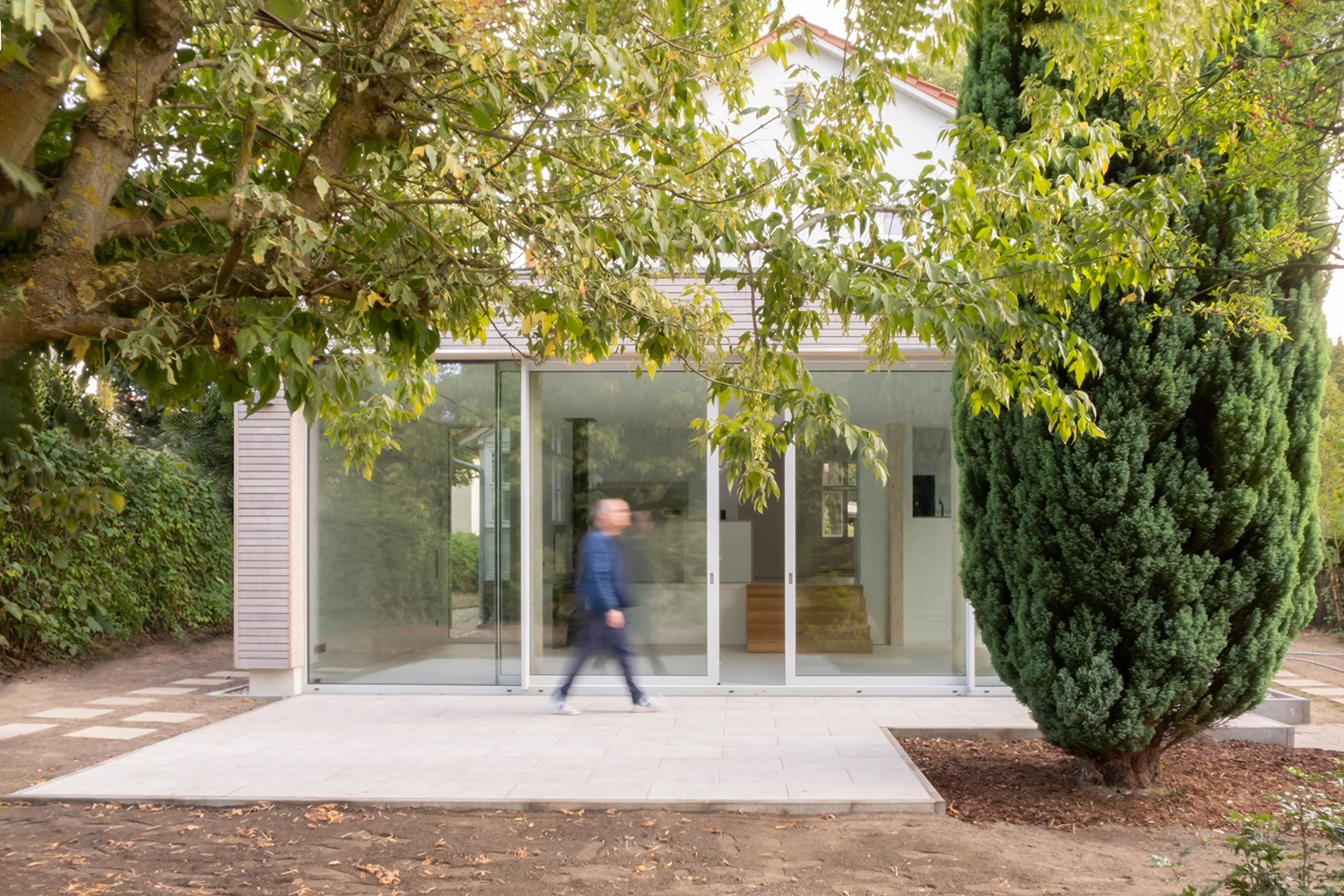
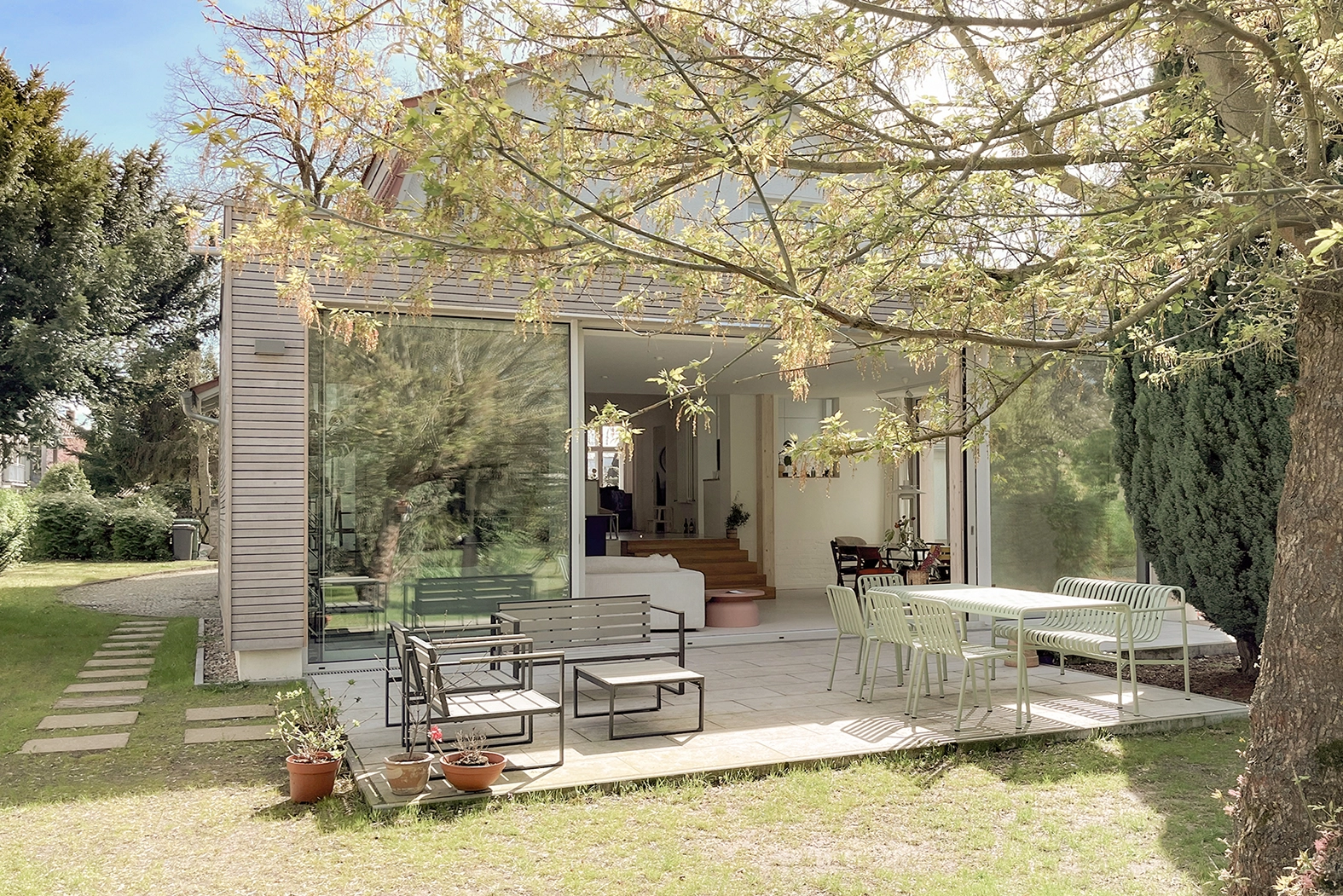
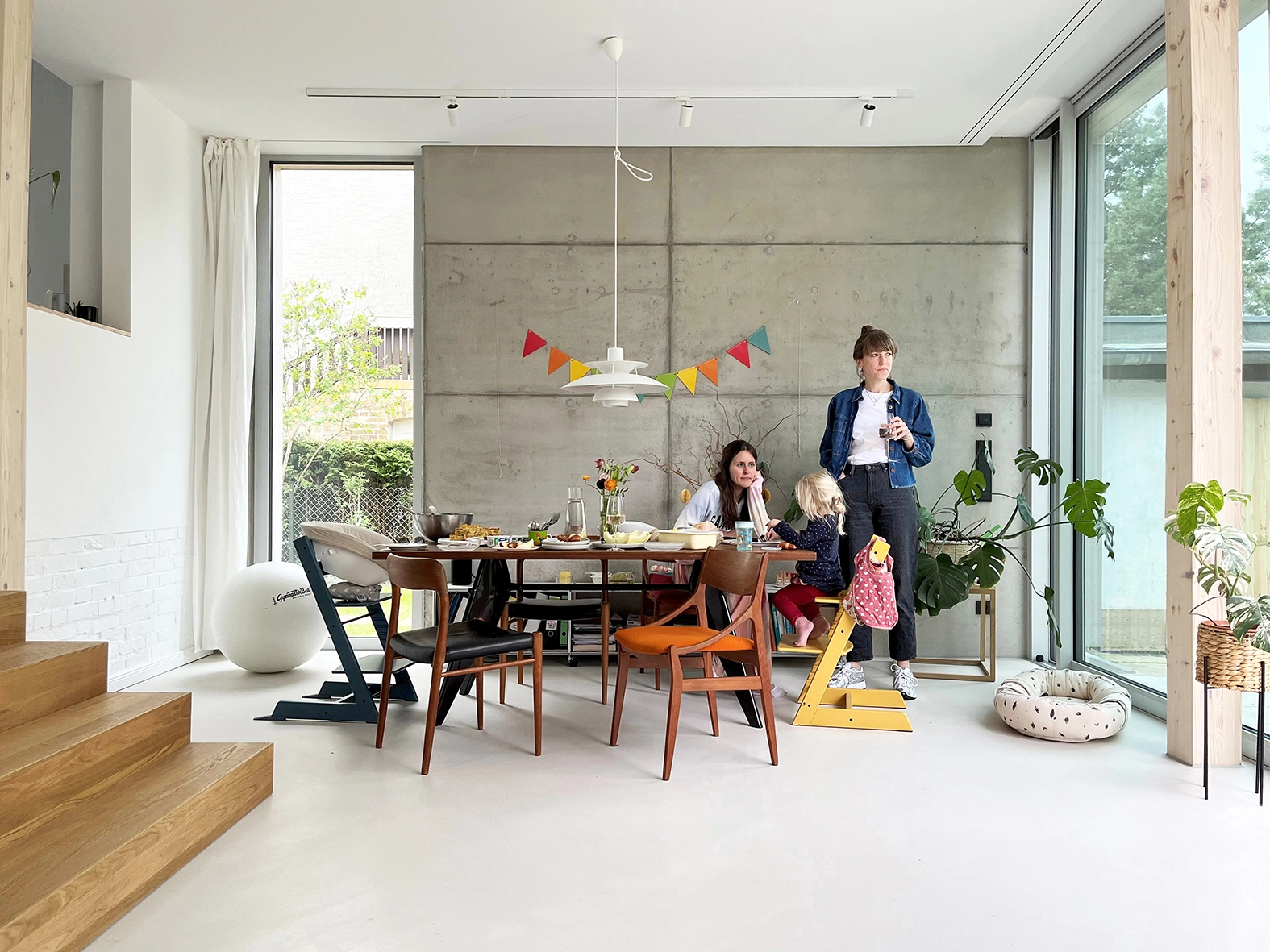
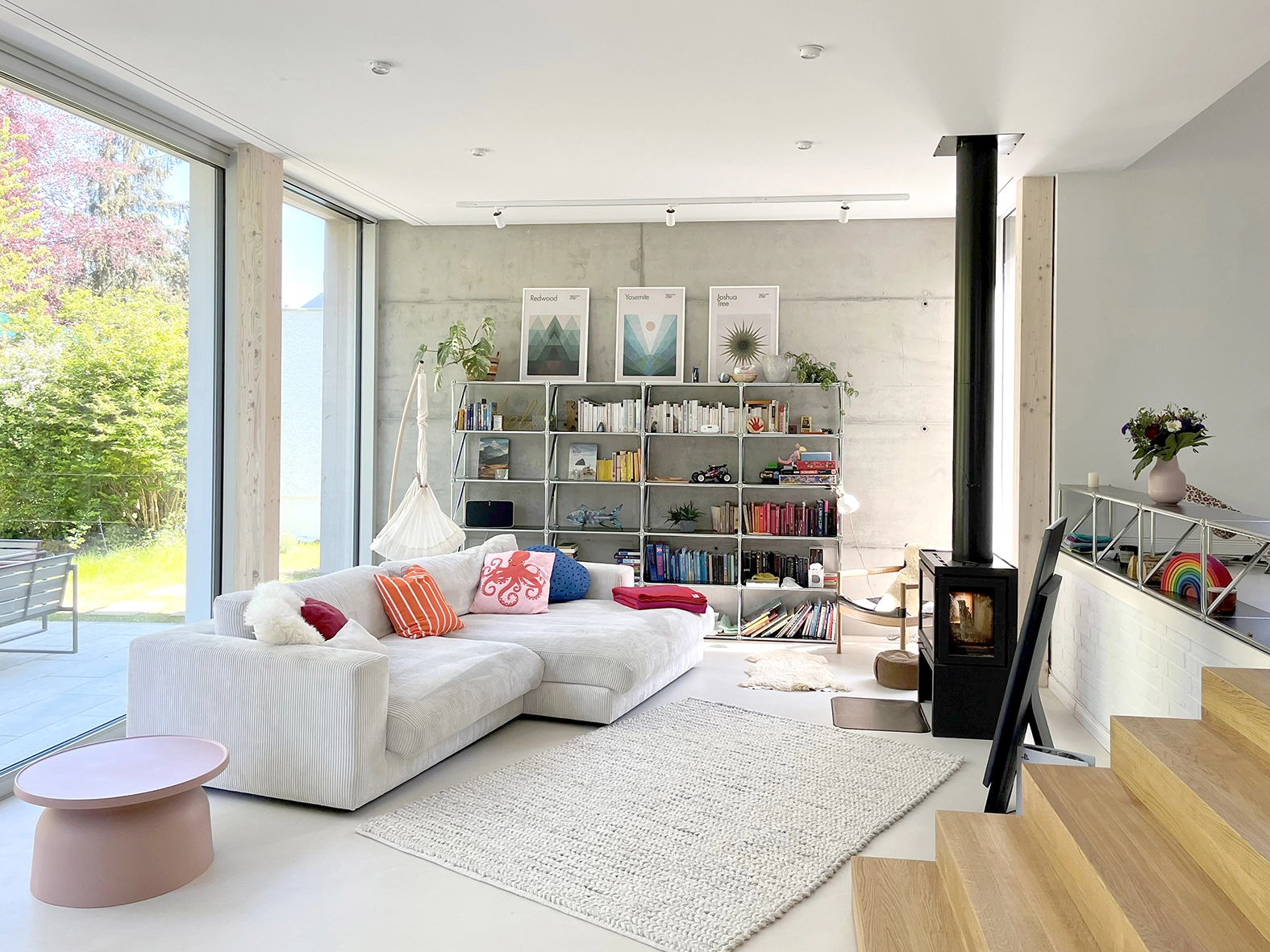
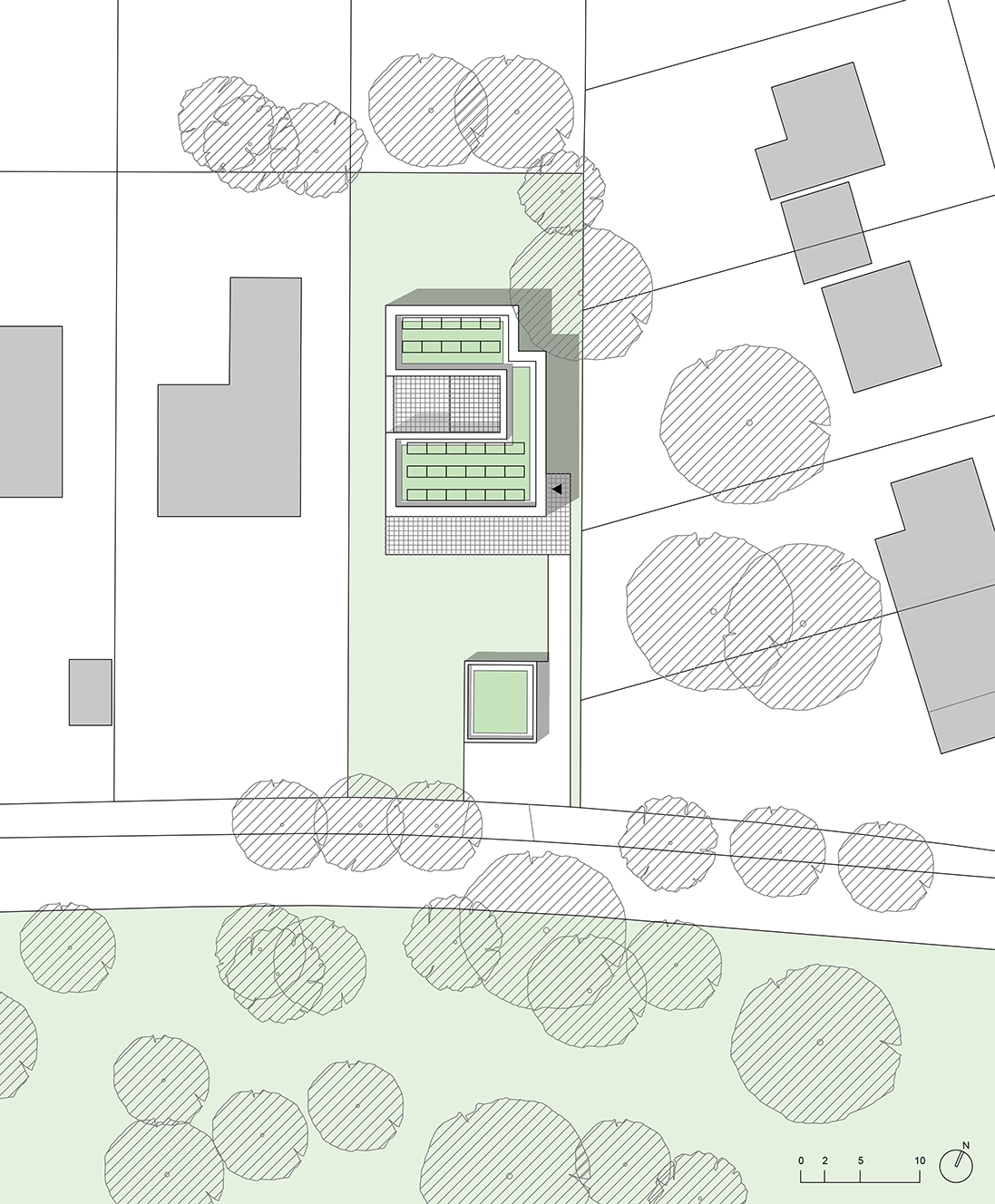
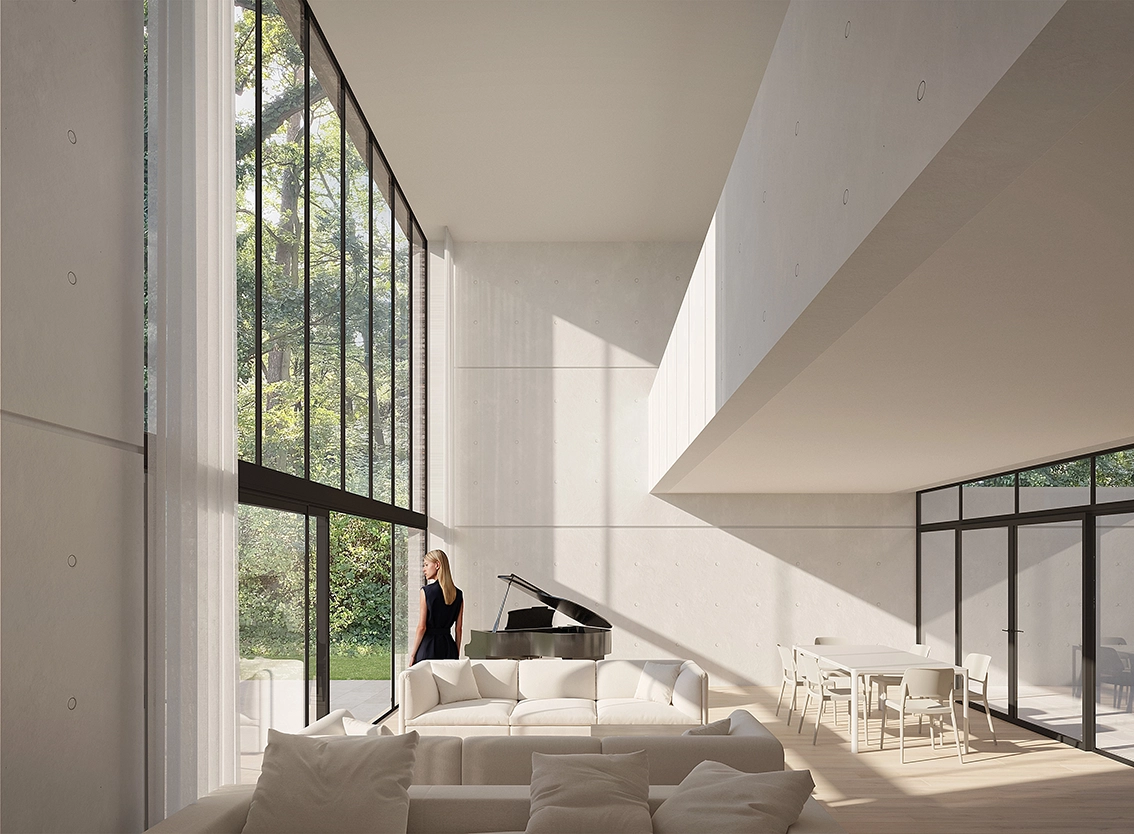
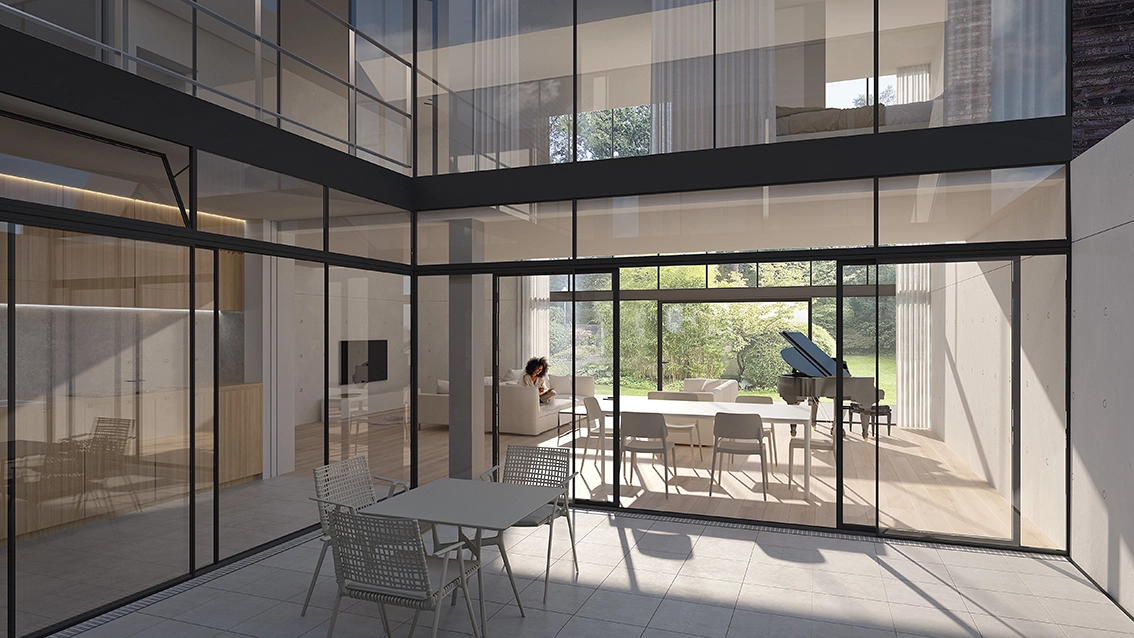
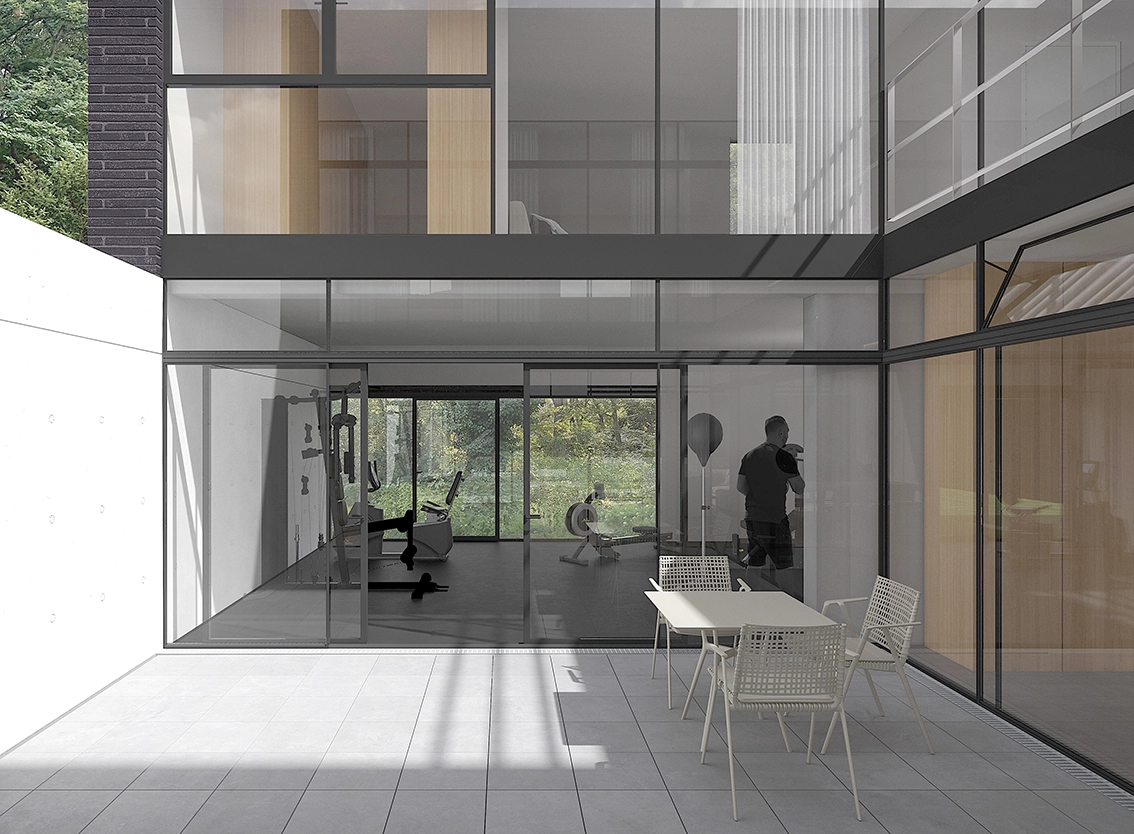
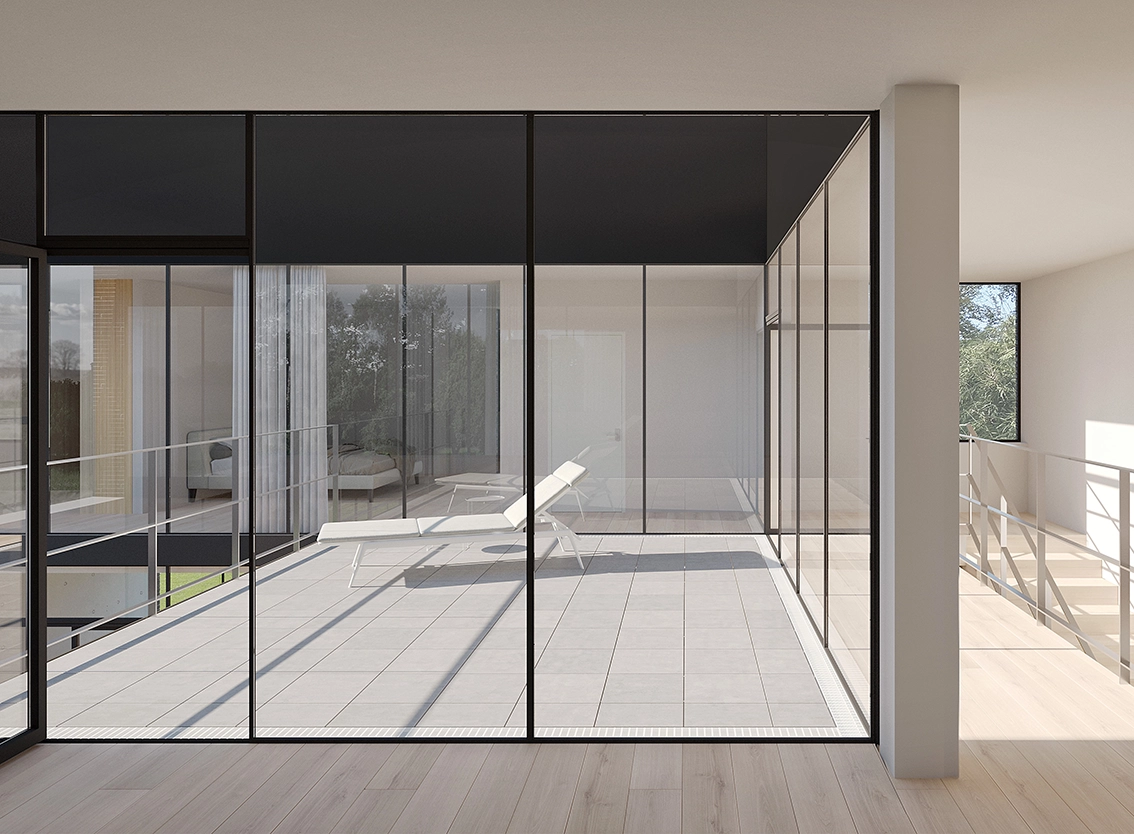
Our project for the new construction of a residential building in Berlin’s Steglitz-Zehlendorf district is designed as a courtyard house. The U-shaped structure is divided into three blocks arranged around the courtyard: the open-plan living and dining area, the private area and the access area.  The two-storey living space opens up to the adjacent park and garden via a large south-facing window. The house has a dark brick façade. Inside, exposed concrete, wooden surfaces made of oak, light wooden floors and a stone covering in the courtyard contrast with the basic white color of the walls and ceilings.
Sustainability and Ecological Concept

The residential building is an energy-efficiency house. The house uses ecological building materials and certified components. Every building material contributes to this. A mixture of reinforced concrete and T8 bricks is used as the load-bearing structure. The bricks make a decisive contribution to the building’s energy balance due to their higher thermal resistance. Another important goal is the economical use of building materials. Concrete components walls, ceilings and columns are minimized. Sustainable recycled concrete with CO2-reduced cement is used. The light color of this concrete is also an important design element of the exposed concrete walls and the minimalist interior. The house is heated and cooled by a geothermal system and brine-water heat pump. It also has controlled living space ventilation and additional cooling ceilings. The roof is planned as a green roof with a photovoltaic system.

Architect: Jens Brinkmann
Collaborators: Aleyna Pakize Mutlu, Giovanna Catullo, Juliana Ambros Cammerer

United-Architektur-Haus-at-the-Park-Lageplan
United-Architektur-Haus-at-the-Park-Wohnzimmer
United-Architektur-Haus-at-the-Park-Wohnen-KĂĽche
United-Architektur-Haus-at-the-Park-Innenhof-Fitnes
United-Architektur-Haus-at-the-Park-Terrasse-Flur

2nd Prize, River Pop-up Restaurant, Canada

River Pop-up Restaurant

Winnipeg, Canada

The RAW:almond river pop-up restaurant is located in the Forks neighborhood, an important historic public area and green space in downtown Winnipeg. For 21 days, the temporary restaurant will offer new culinary experiences. The restaurant has three total seating spaces. Each seating space has a different guest chef for three consecutive nights. It stands on the frozen water at the junction of Red River and Assiniboine River and will be a part of the skating rinks, trails, and snow park structures erected in Forks during winter.

1) Kitchen as stage
We propose a round building to emphasise the idea of the central kitchen with the restaurant being organized around it. The visible preparation of the food, as in a Sushi restaurant, serves as an event as well as a guarantee for quality dining.

2) Sensorial space
We want to present cooking and eating as an entire sensory experience. Through smelling, watching, hearing, and tasting, our spatial concept emphasizes food as the major component. For the customer, the space offers an active participatory role in the event of cooking which is different to a conventional restaurant.

3) Chef as artist
By staging the chef as artist, we would like to follow on from the concept of last year’s and the year before that’s restaurant, taking into account the growing significance of the kitchen. In 2013, the seating space and kitchen were still separate entities; whereas in 2014, the kitchen box had already been included in the overall space. For 2015, we propose one single space for seating and kitchen.

Architects: Jens Brinkmann
Collaborators: Taehun Oh, Quentin Rihoux

United-Architektur-Pop-up-restaurant-RAWalmond-Modell2
United-Architektur-Pop-up-restaurant-RAWalmond-Modell1

Meyer-Köring Law Firm, Berlin

Meyer-Köring Law Firm

Berlin, Germany

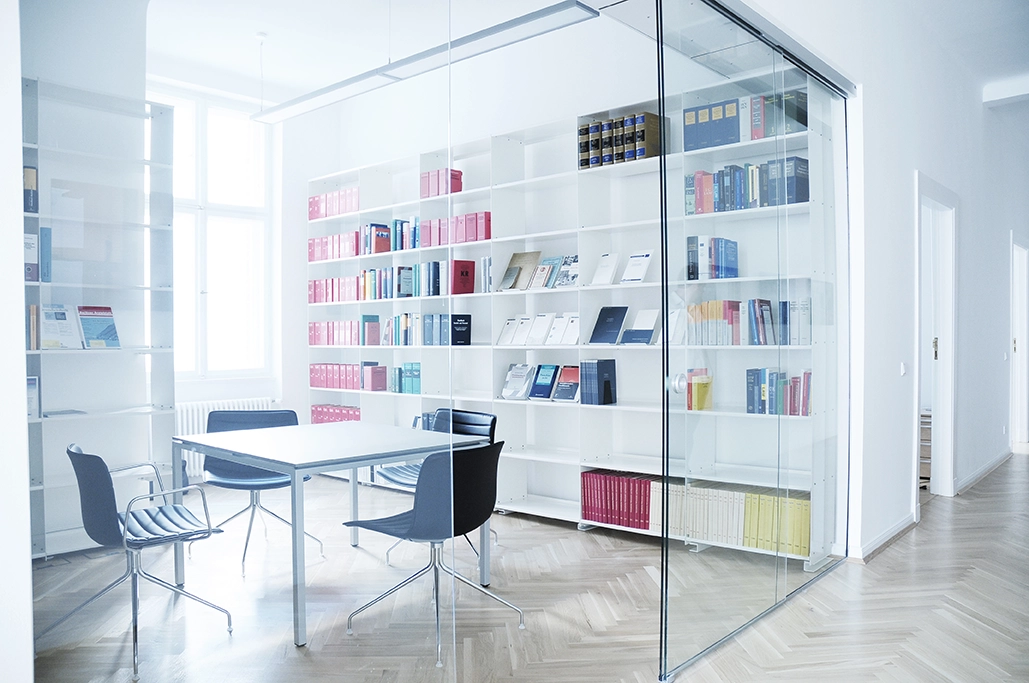
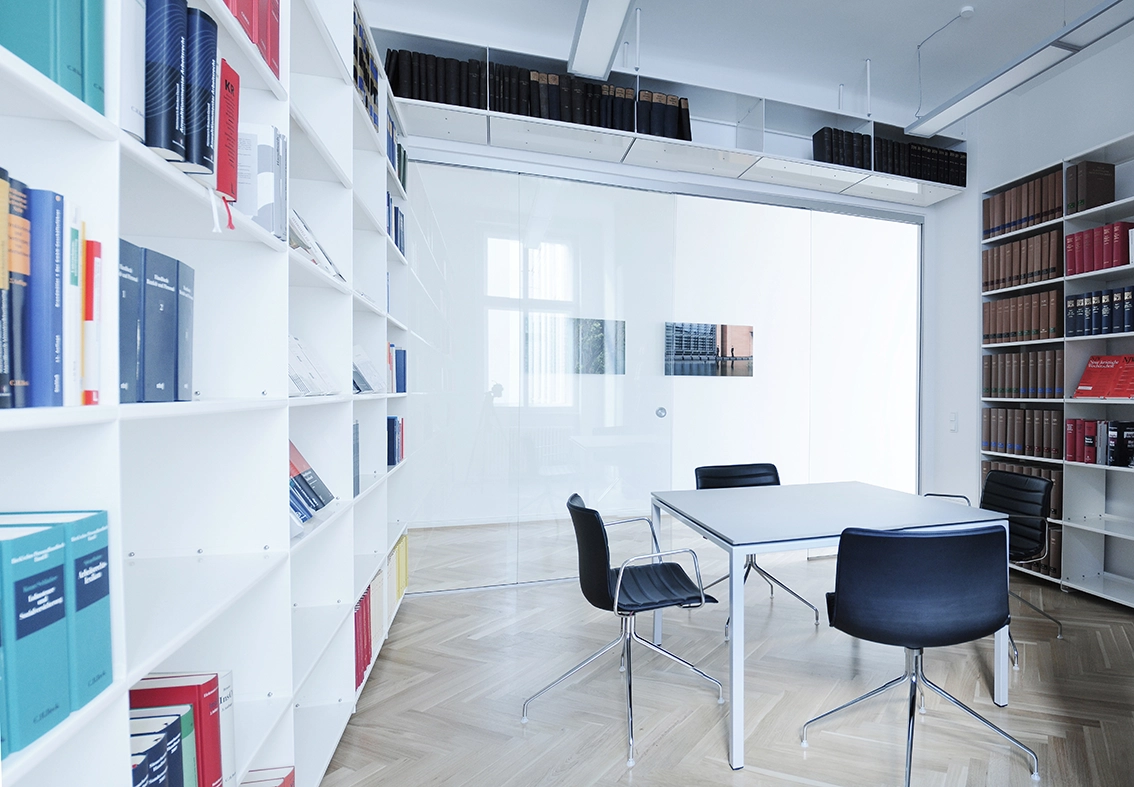
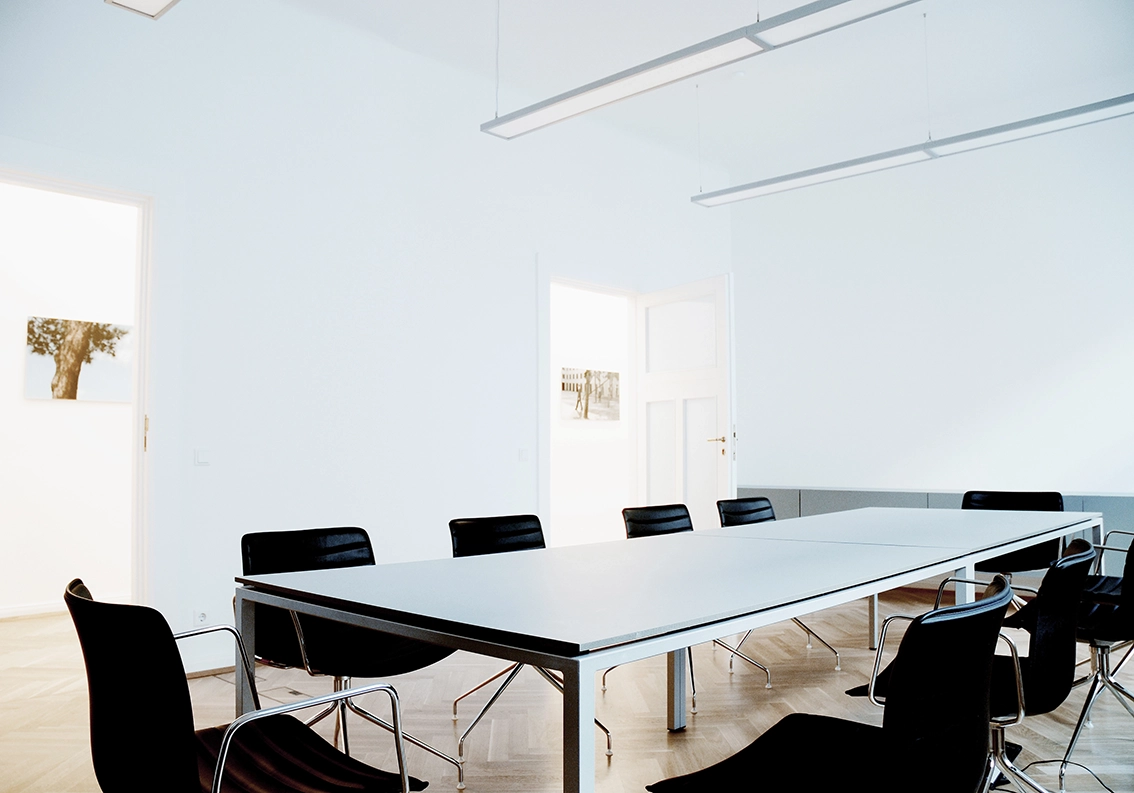
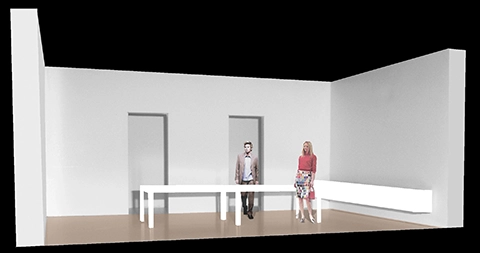
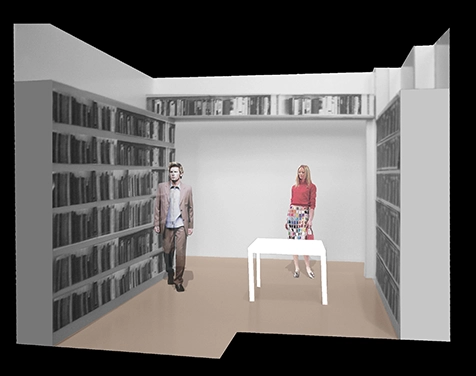
Meyer-Köring is a law firm based in Bonn and Berlin. The clients asked for a design concept for the reception area of their new Berlin-Mitte office, including a conference room as well as a waiting room and library.
The project involved the design of furniture, a conference table, a sideboard as well as library book shelves and a waiting/work table. The design concept follows the simple idea of lightness and openness: table tops, the sideboard and book shelves seem to float in space. At the same time, the use of innovative materials such as fibre concrete contrasts the impression of lightness creating an extraordinary spatial expression. Simplicity and generosity generate a very good working atmosphere.

Architects: Jens Brinkmann
Collaborators: Katharina Wagner, Julie Biron
Photos: Giorgi Sautaschvili

United-Architektur-Kanzlei-Meyer-Köring-Berlin-Umbau-Möbel-office1
United-Architektur-Kanzlei-Meyer-Köring-Berlin-Umbau-Möbel-office2
United-Architektur-Kanzlei-Meyer-Köring-Berlin-Umbau-Möbel-meeting-room
United-Architektur-Kanzlei-Meyer-Köring-Berlin-Umbau-Möbel-Konfrenzraum
United-Architektur-Kanzlei-Meyer-Köring-Berlin-Umbau-Möbel-Bibliothek

Akademie fĂĽr Malerei

Akademie fĂĽr Malerei

Art school and Gallery, Berlin-Charlottenburg, Germany

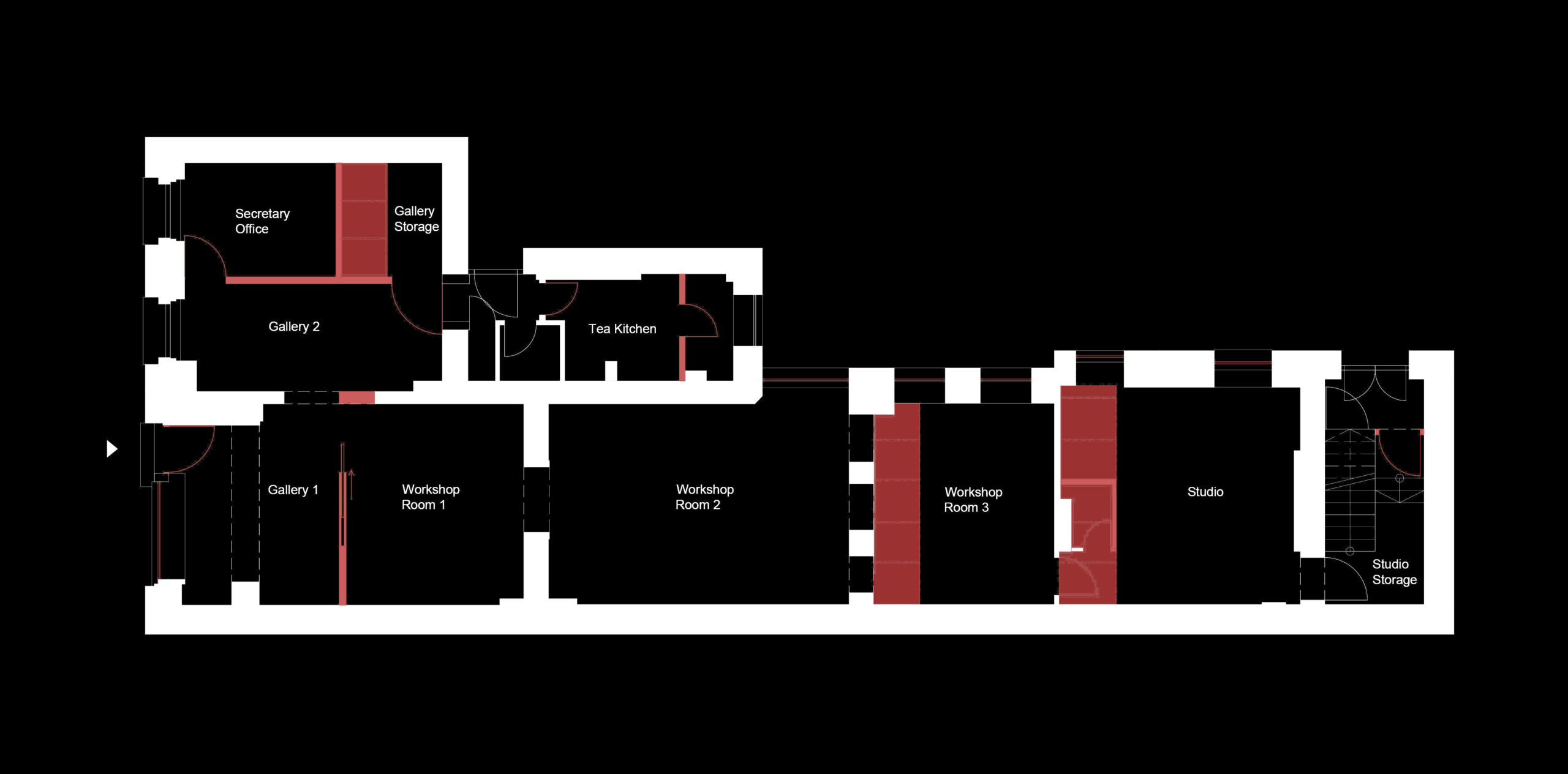
The Akademie fĂĽr Malerei and Gallery ROOT in Berlin-Charlottenburg opened its new premises to the public on September 30th, 2021. The owner wished to relocate her workshop, gallery, studio and storage space to a new building. The rooms on the street act as public gallery space for Galerie ROOT, while the rooms to the rear support the private painting school. Along the interior axis, some interior walls were demolished and new partitions were put in place to improve the connection between all working and storage spaces. The ceiling roses, moldings and some doors were preserved due to their historical and aesthetic value.

Spatial Layers

Our design intervention deals with the organisation and overlapping of spatial layers and is achieved by combining function with aesthetics. The layers are emphasised with varying transparent, semi-transparent and closed division walls. One of these is the custom-made polycarbonate door that creates a flexible division between the front gallery spaces and the workshop spaces behind. Due to the depth of the building and the limited possibility to let in natural light, the design for this partition is partially transparent, with a clerestory window above. In this way, the rooms behind borrow natural light from the street façade. Additionally, the light concept emphasises the continuity of space from the front gallery towards the rear workshop spaces.

Hanging Shelves
We designed a timber shelving system that will over time be filled with student art work and class material. Its light, hanging structure makes use of the high ceiling space for storage without interfering with valuable workshop space. The timber batten structure also creates divisions to organise paintings and canvases. In this way, the shelves become both a functional and aesthetic design element.

Architects: Jens Brinkmann
Collaborators: Duc Minh Le, Tuang Anh Nguyen, Jerome Schloh, Cédric Razanakoto

United-Architektur-Akademie-fĂĽr-Malerei-Plan Black
United-Architektur-Akademie-fĂĽr-Malerei-Elevation
United-Architektur-Akademie-fĂĽr-Malerei-Modell2
United-Architektur-Akademie-fĂĽr-Malerei-Modell1
United-Architektur-Akademie-fĂĽr-Malerei-Stellage2
United-Architektur-Akademie-fĂĽr-Malerei-Stellage

1st Prize Housing, Aulendorf

Aulendorf Housing

Aulendorf, Germany

Aulendorf Housing is an urban design competition for the future of residential housing in Aulendorf, a city close to Lake Constance. Aulendorf is characterized by its proximity to the city and the historical park landscape (historical baroque and landscape gardens). The strong unity of urbanity and nature became the leading idea of the design proposal. The project defines five areas of focus, which show strong variations in character and scale: the square in front of the palace, the baroque gardens, the Parkstrasse high density residential area, the Schussental Sanatorium and the low density residential area of Safranmoos.

Architects: Dr. Jens Brinkmann, Alejandro Tomás Roldan
Landscape Architect: Dana Matschek

United-Architektur-Aulendorf-Housing-Modell

Kindergarten at SchloĂźplatz, MĂĽnster

Kindergarten at SchloĂźplatz

MĂĽnster, Germany
Town Planning Idea: Between garden and city

The differentiation between the side of the city and the side of the garden becomes the central idea of our construction plan for the kindergarten at the Schlossplatz in MĂĽnster. The side of the city is used as a forecourt. The recess of the ground floor marks the generously covered entrance, while the orientation of the terrace towards the garden refers to the overall landscape of the former town fortification with its promenade and redoubts.

Terraces and Children’s Rooms

Four children’s rooms have access to the terraces, while the fifth, which lies towards the side of the city, has a large glazed balcony. It has a decisive influence on the appearance of the building. By rising over the edge of the building it allows the children to see the garden below. The flight of stairs that go along the wall, which is under preservation orders, serve as the direct entrance to the garden.

Children’s Scale

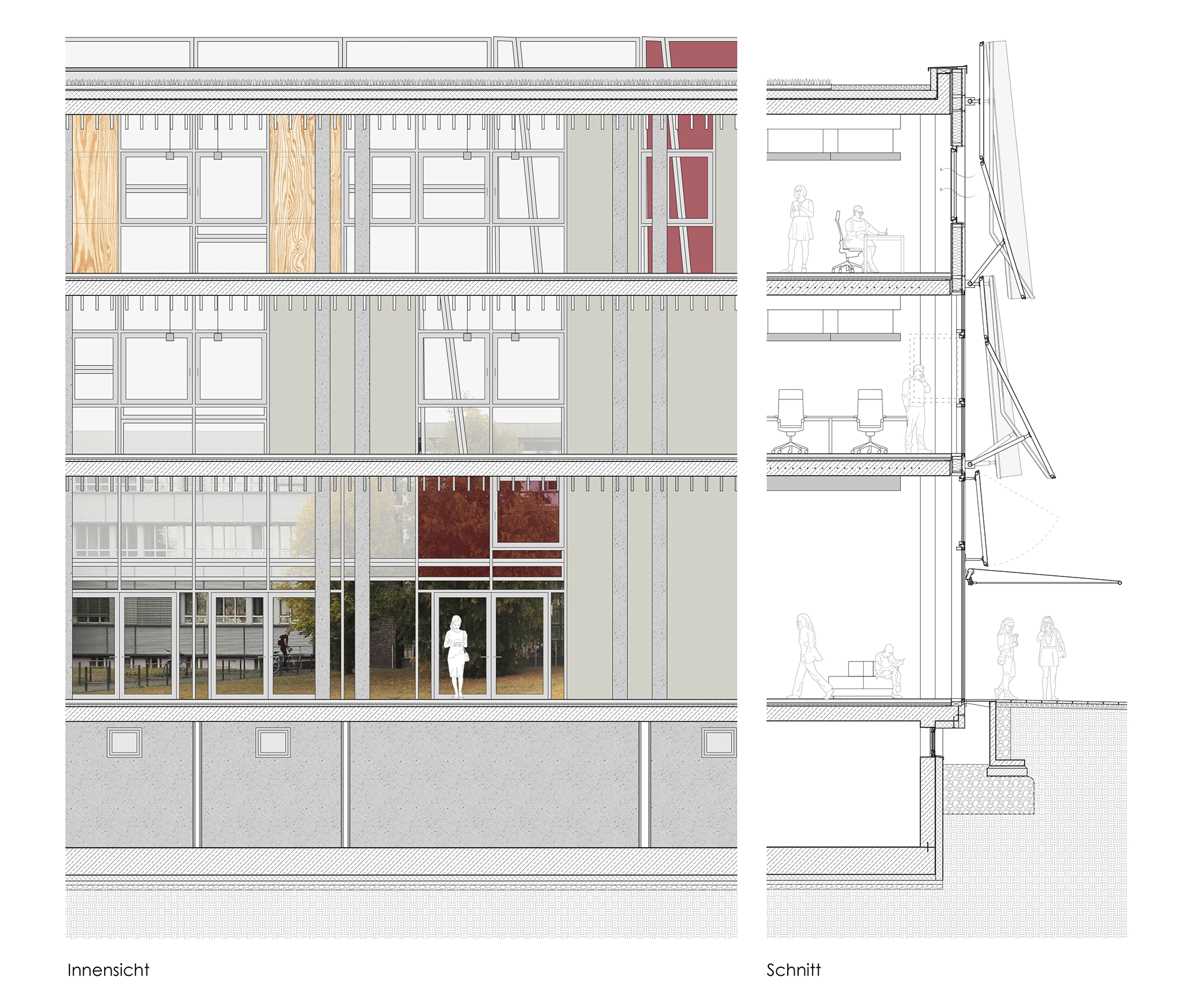
The balustrade of the flight of stairs has a handrail that allows the children to see the gatehouse. The outer window jambs are connected to folding arm awnings that provide a flexible protection from the sun. The extent to which the awning is opened individually determines the view. On the inside, the windows are formed to be 40 cm high large seating niches where the children can read, play and look outside.

Material and sustainability

The building is constructed from concrete. The facade is covered in overlapping brick tiles. The play of red combined with the façade’s relief gives a spatial depth to the surface. The tiles allow a long durability, minimum maintenance and can be easily be recycled.

Architects: Jens Brinkmann
Collaborators: Carolina Vital do RĂŞgo, Minh Le, Tuan Anh Nguyen, SoleĂŻa Pierre
United-Architektur-Kinderkarten-MĂĽnster-Modell2
United-Architektur-Kinderkarten-MĂĽnster-Section
United-Architektur-Kinderkarten-MĂĽnster-Kindergartenmodell
United-Architektur-Kinderkarten-MĂĽnster-Modell1
United-Architektur-Kinderkarten-MĂĽnster-Garden

Furniture Design

Furniture Design

Archive Cabinet
Meyer-Köring Law Firm, Berlin/Bonn, Germany

United-Architektur-Meyer-Köring-Funiture-Design-Sideboard-Carpenter-2
United-Architektur-Kanzlei-Meyer-Köring-Berlin-Umbau-Möbel-sideboard2
United-Architektur-Meyer-Köring-Funiture-Design-Sideboard-Carpenter-1

New Airport Terminal, Innsbruck, Austria

Innsbruck Airport

Austria

The Innsbruck Airport is placed between two mountain ranges – the Inntalkette in the Karwendel Mountains in the north and the first mountains of the alpine central range in the south.

The competition concerned the new construction of the 12,000 m2 airport terminal for the Innsbruck Airport. Our design creates a clear orientation for the travellers. An elongated slight canopy connects the terminal to the check-in in the existing building. The roof, whose design is adapted to the adjacent car park and the opposite multi-storey car park, creates an extended covered drop-off zone to enter the airport. The extension of the dark glazed facade of the existing check-in building to the new building supports the realisation of a new overall design concept. The surrounding mountains are reflected in the facade of the building which makes travelling from Innsbruck Airport an unforgettable experience.

The drop-off zone opens up to the central terminal building. A slightly angled wood-panelled wall helps to orientate travellers inside the hall as it separates the public and the security area. Elevators, stairwells, storage rooms and rest rooms nestle in this wall. The girder of the roof structure is made of local timber. Two horizontal light-strips in the facade of the entrance and in the angled wall allow sunlight to brighten the central hall.

A decisive aspect of the construction plan is the internal functional linkage of the new building and the existing check-in building. The new hall links the existing check-in area and the arrivals area on the ground floor with the departure lounge on the top floor. A café, a supermarket, shops and a restaurant with view on the runway are arranged there. The offices and the technical rooms are housed separately from the passengers in the second floor. The new building matches the height of the storeys in the existing building. A double flight of stairs leads the passengers back to the waiting areas for Schengen and non-Schengen flights on the ground floor where the gates to the runway can also be found.

Architects: Jens Brinkmann
Collaborators: Minh Le, Tuan Anh Nguyen, Mariam Founda, Jerome Schloh
United-Architektur-Flughafen-Innsbruck-Entrance
United-Architektur-Flughafen-Innsbruck-Drawings1
United-Architektur-Flughafen-Innsbruck-Drawings2
United-Architektur-Flughafen-Innsbruck-Ankunft
United-Architektur-Flughafen-Innsbruck-Terminalhalle

Case Study House II, Greece

Case Study House II

Platanias, Greece

The holiday home is located in the seaside resort of Platanias on the southern coast of the Pilion peninsula. In this part of Greece the landscape is characterised by the proximity of forested mountains and the sea. As a case study, the experimental nature of the house is a testament to the innovative spirit of sustainable design. It uses only recyclable and reusable materials, emphasising sustainability from the ground up.

The house is designed as a timber construction. The lightweight construction also responds to the need for seismic safety in the region. The facades are made primarily of glass and translucent polycarbonate panels, which not only enhance the visual appeal, but also provide natural light while maintaining privacy. These panels create a soft, diffused light inside the house, blurring the boundaries between indoor and outdoor spaces.

The house consists of three main units. First, the living room, dining area, kitchen and covered terrace. Second, a compact group of bedrooms and bathrooms. Thirdly, a roof terrace with a view of the sea. It is accessed via a staircase located at the covered terrace. The elongated space is framed by translucent polycarbonate walls that provide privacy and protection from the Mediterranean breeze.

United-Architektur-Case-Study-House-II-Greece-Lageplan
United-Architektur-Case-Study-House-II-Greece-Isometric
United-Architektur-Case-Study-House-II-Greece-Ocean-View
United-Architektur-Case-Study-House-II-Greece-Perspective-Garden-1
United-Architektur-Case-Study-House-II-Greece-Roof-terrace

Museum of the 20th Century, Berlin

Extension of New National Gallery

Museum of the 20th Century, Berlin

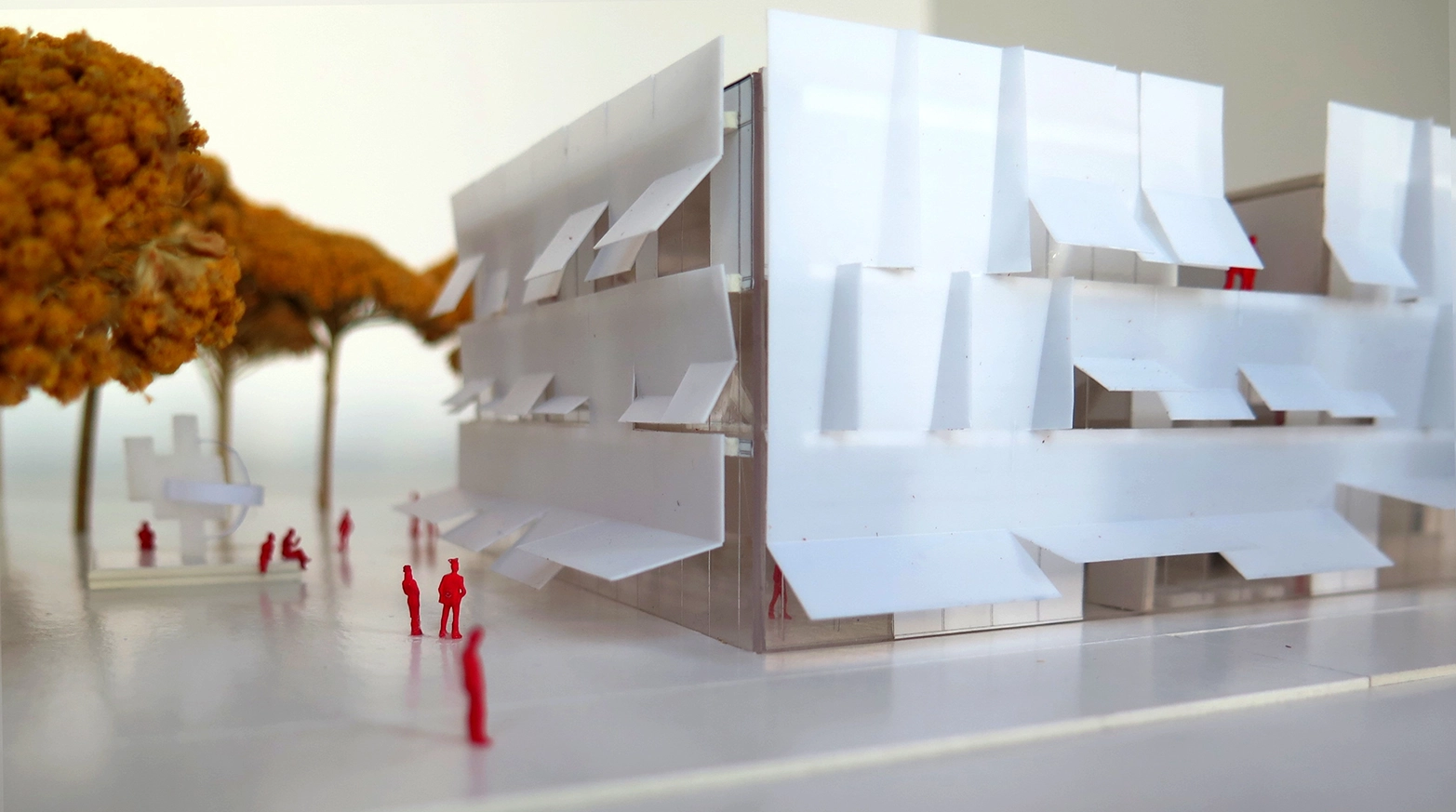
Our design for the Museum of the 20th Century, the extension of the New National Gallery Berlin, strengthens the urban presence of the Kulturforum towards Potsdamer Strasse. The new building creates the scale counterpart to the State Library and the Berlin Philharmonic Hall that has been missing since reunification. At the same time, it frames the historic building edge along Matthäikirchplatz.

The guiding idea for the new museum building is the window to the city. As a mediator between urban and art space, it emphasizes the public character of the building. At the same time, it divides the floors longitudinally and opens the building with generous views to the Neue Nationalgalerie and the Philharmonie.

 The building has two main entrances. On the side facing Potsdamer Strasse, an elongated recess of the building leads to the foyer. Coming from Scharounplatz and Mathäikirchplatz, access is via the generous entrance terrace in front of the space-defining plane tree.

The facades consist of silver anodized aluminum panels and are designed in the base area as an interpretation of the Philharmonie’s facade pattern. On the floors above, the panels are doubled in scale and emphasize the soaring form of the structure.

Read more

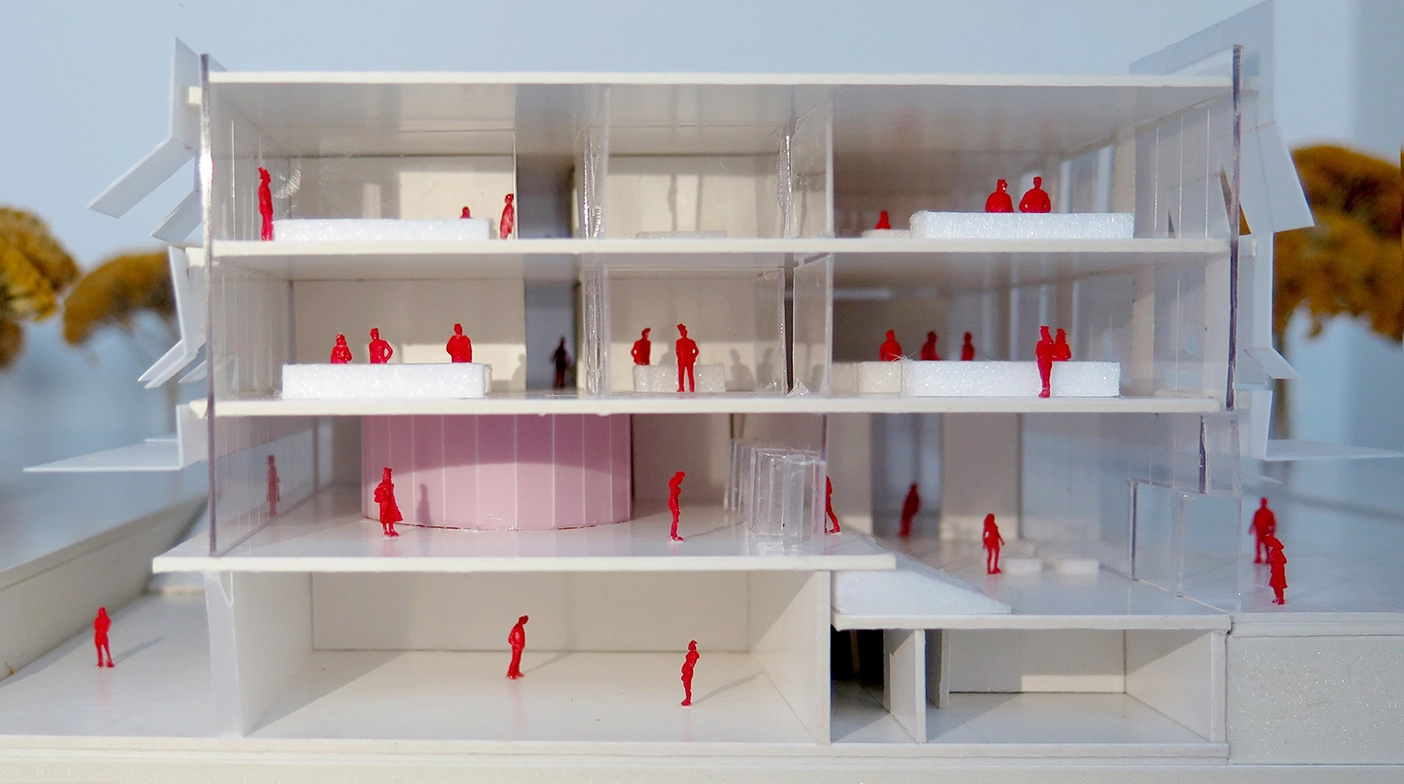
The spatial concept of the new museum building comprises four exhibition levels, which are divided into two spatially coherent areas. The two areas, the lower exhibition level and the first floor, as well as the areas on the first and second exhibition levels, can each be experienced as a unit via double-story rooms.

The floor levels are illuminated by two “city windows” that structure the exhibition parcours and invite visitors to linger with views of the Kulturforum and the surrounding city.

The exhibition areas are accessed via a central access core with a main staircase and elevators. Administration and restoration have a separate side elevator.

The art depot is divided into two parts. One part is located on the top floor of the building. The scientific administration and the restoration are also located there. The spatial proximity of these three functions promotes internal communication and efficiency of work. The second part is located on the lower exhibition floor.

The lighting of the exhibition areas with artificial light is provided by a grid ceiling with flexible lighting elements. The ventilation and air conditioning systems are also located within the suspended structure. Wall and floor areas are thus freed from any technology and allow a high flexibility and quality of use.

Architects: Jens Brinkmann
Landscape Architects: Siegfried Bacher
Collaborators: Cécile Bernard, Emily Pearce, Chiara Sanguin,
Mona Rahal, Francesca Klute
Renders: Thomas Saint-Guillain, Alessandra Roccia
United-Architektur-Extension-New-National-Gallery-Berlin-Lageplan
United-Architektur-Extension-New-National-Gallery-Berlin-Modell
United-Architektur-Extension-New-National-Gallery-Berlin-Section-Perspective
United-Architektur-Extension-New-National-Gallery-Berlin-Restaurant-View
United-Architektur-Extension-New-National-Gallery-Berlin-interior
United-Architektur-Extension-New-National-Gallery-Berlin-Grundriss3
United-Architektur-Extension-New-National-Gallery-Berlin-Grundriss1
United-Architektur-Extension-New-National-Gallery-Berlin-Grundriss3
United-Architektur-Extension-New-National-Gallery-Berlin-WEST-EST-Section
United-Architektur-Extension-New-National-Gallery-Berlin-SOUTH-NORTH-Section

Privacy Settings
We use cookies to enhance your experience while using our website. If you are using our Services via a browser you can restrict, block or remove cookies through your web browser settings. We also use content and scripts from third parties that may use tracking technologies. You can selectively provide your consent below to allow such third party embeds. For complete information about the cookies we use, data we collect and how we process them, please check our Privacy Policy
Youtube
Consent to display content from - Youtube
Vimeo
Consent to display content from - Vimeo
Google Maps
Consent to display content from - Google