Palmela Archeological Site Museum, Portugal

Palmela Archeological Site Museum

Europan 8 Competition, Aldeia Bacelo, Portugal

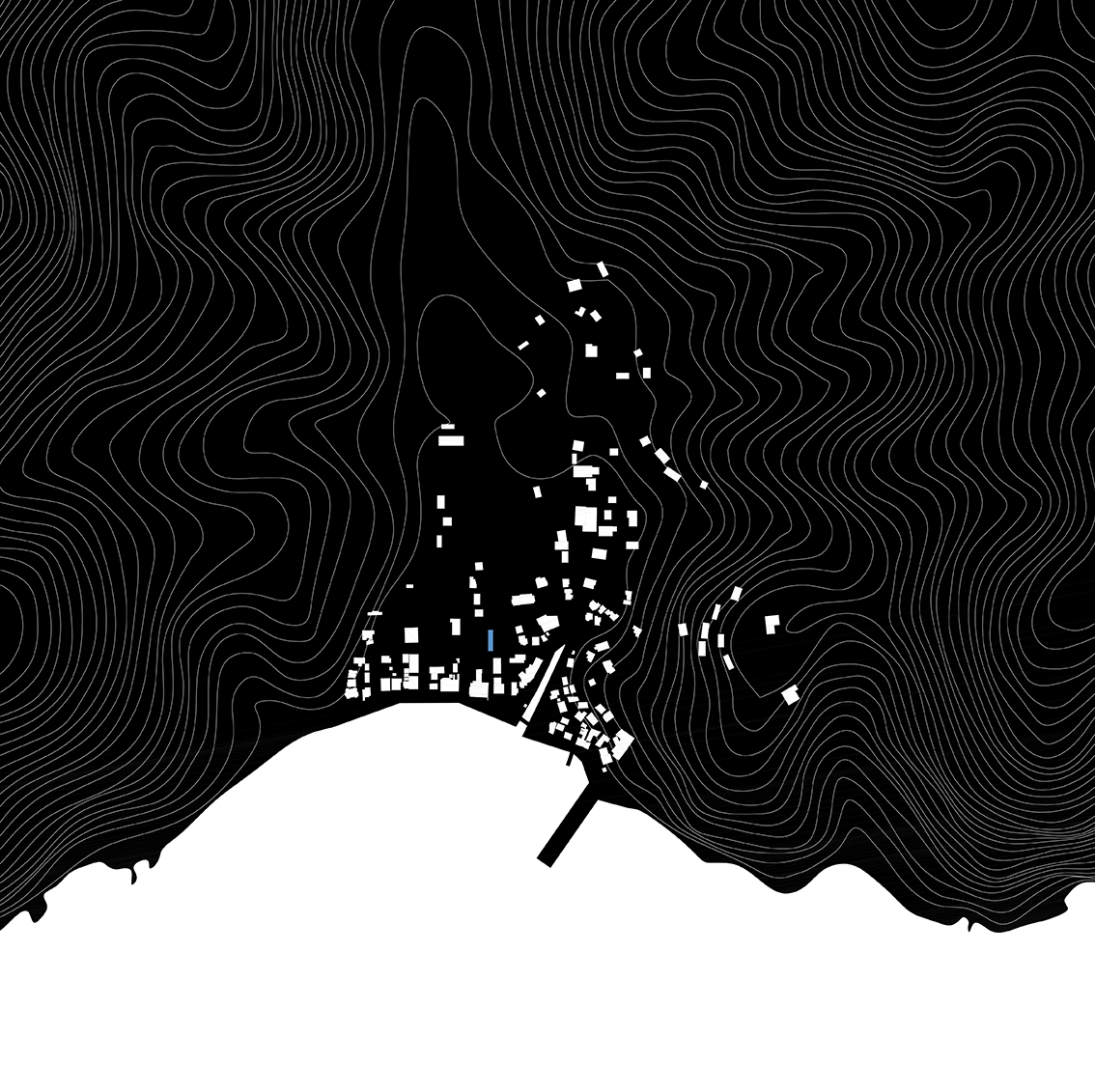
The natural surroundings, existing structures and new centres are connected with each other by finding the common denominator between these elements. Borders, levels, eye scapes and functions are highlighted to create a new common identity. Our project aims to strengthen the dominant elements of the town of Aldeia Bacelo:
– the border between the Arrábida Natural Park and the urbanized area
– the topographic situation in terms of slightly but notable differences in levels
– the dominant horizon of the Louro Mountain Ridge which overlooks the whole town.

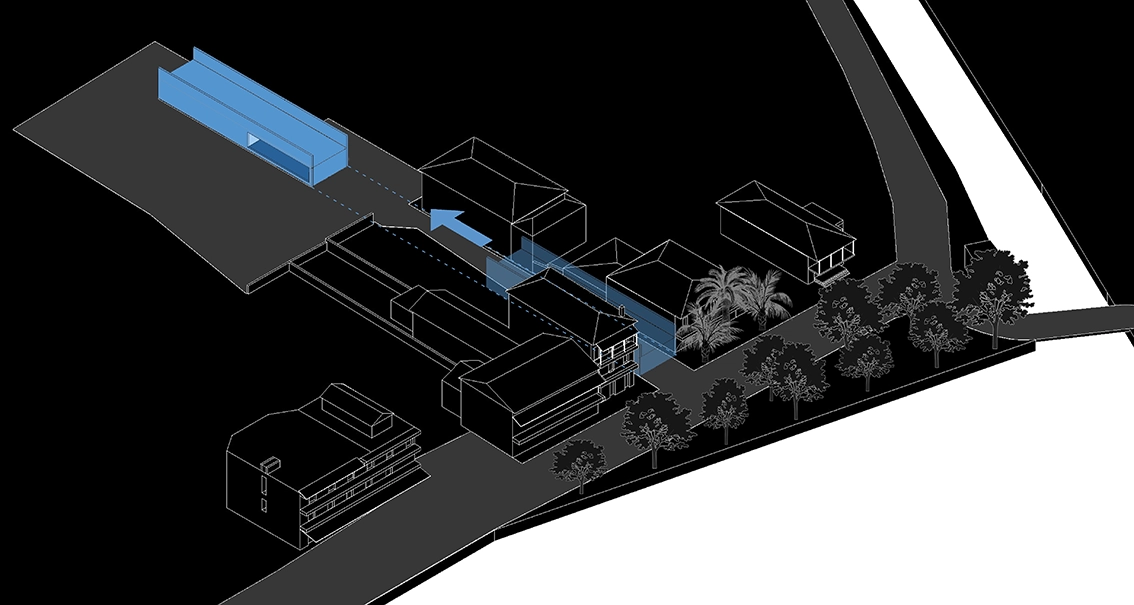
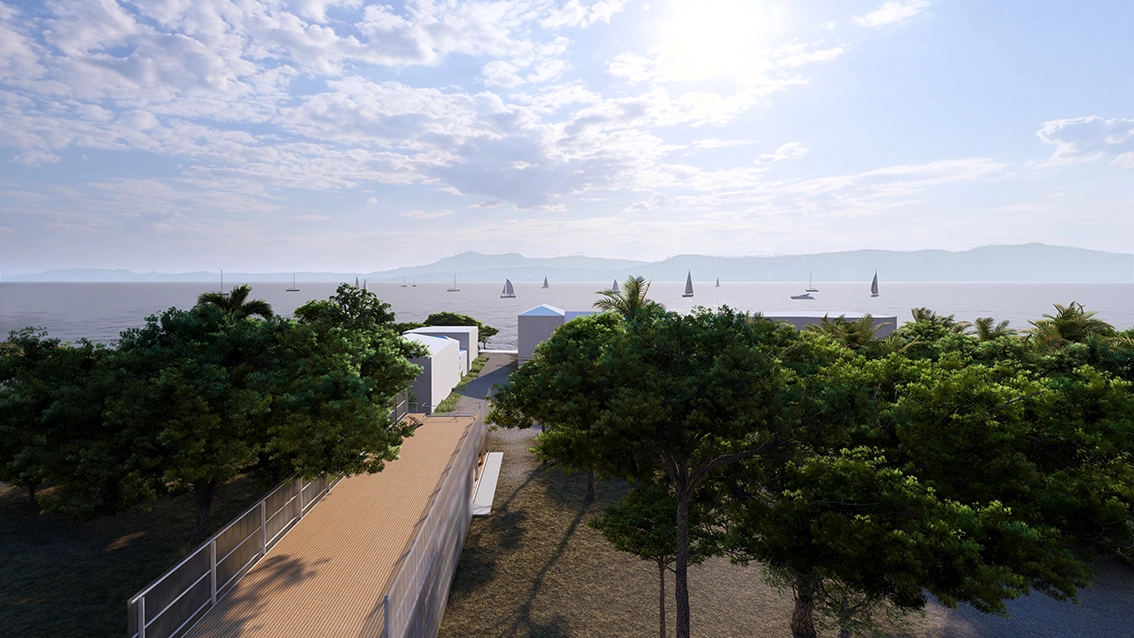
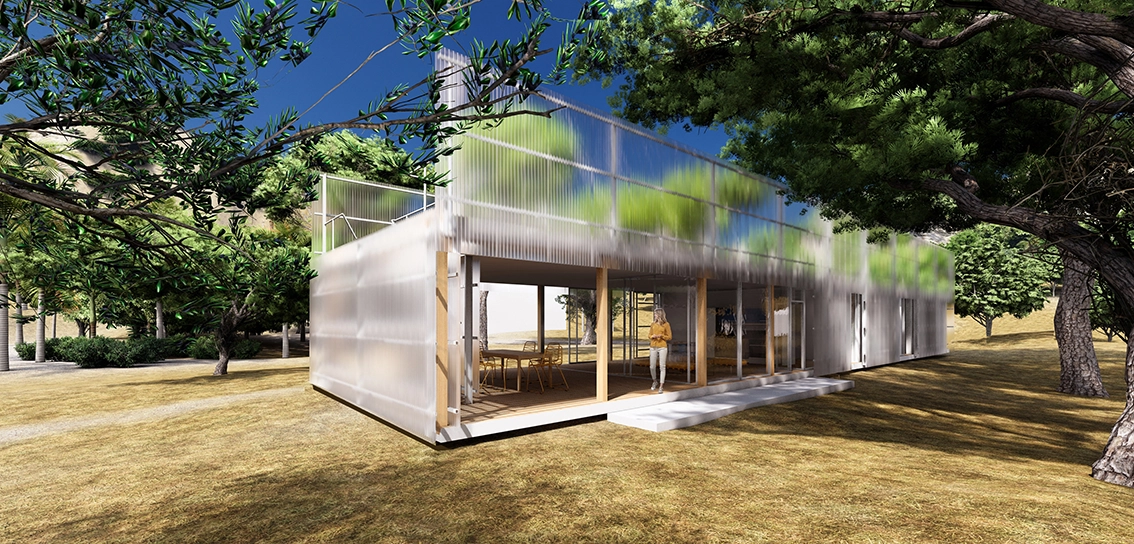
The Archeological Site Museum and the Environmental Centre houses the information office for nature tourism. This building not only reflects the natural form of the archaeological site, but also connects to the site of the finds by garden terraces extending into the landscape. The borders between new and existing are obvious, but the interconnectivity overrides these structures.

The accessible roofs become part of the landscape experience. Through tapered shaped skylights, light is directed into the interior of the building. They also serve as structural support for display cases and exhibition devices.

Architects: Dr. Jens Brinkmann
Collaborators: Cristiane Egger, Anna Kulka, Vanessa Nebgen

United-Architektur-Pamela-Archeological-Site-Museum-Schnitt
United-Architektur-Pamela-Archeological-Site-Museum-Grundriss
United-Architektur-Pamela-Archeological-Site-Museum-AUSSTELLUNGS-RAUM
United-Architektur-Pamela-Archeological-Site-Museum-Modell

Open-air swimming pool Bruggerhorn, Switzerland

Open-air swimming pool Bruggerhorn

St. Margrethen, Switzerland

The Bruggerhorn is a bathing lake offering views of the foothills of the Vorarlberg Alps. It has been used as a public bathing spot since the middle of the twentieth century. The lake was formed when a gravel quarry was dug out, and it is historically significant as it is part of the old Rhine riverbed. Today, the beach and the Bruggerhorn campsite are an important part of urban culture in the municipality of St. Margrethen, reflecting the dialogue between bathing culture and social function.

The urban development and open space concept proposes separate access to the beach, restaurant and campsite. The visitor path to the beach has been significantly enhanced and now leads from the access road, past the cash desk area and cloakroom wing, and over the new terrace to the sunbathing lawn. The gently sculpted access to the water includes a new, south-facing footbridge. This provides safe access while offering a new amenity in the form of a terraced staircase for sunbathing and a small beach area for children.

Architects: Jens Brinkmann
Collaborators: Paula Dagmar Petrovic

Cooperation with:
Landscape architecture: Donald Jacob, Basel, Switzerland

United-Architektur-Strandbad-Bruggerhorn-Lageplan
United-Architektur-Strandbad-Bruggerhorn-Schnitt
United-Architektur-Strandbad-Bruggerhorn-Fassadenschntt
United-Architektur-Strandbad-Bruggerhorn-Modell

Kite Surf School, Brazil

Kite Surf School

Lençóis Maranhenses, Brazil

The National Park of Lençóis Maranhenses located on the North-east coast of Brazil was the location of our latest competion project. The vast 1.550 km2 area of sand dunes intercepted with fresh water lagoons makes the site incredibly unique and environmentally delicate. The wind constantly sculpts the dunes and lagoons into new forms. The exposed location also makes it a fantastic place for kite surfers.

The Kite Surf School is a ‘kite boat’. It is composed of many textile planes stretched over a lightweight steel frame that is fixed onto a floating pontoon. Our design creates a structure that is moveable, receptive and adaptive to the seasonal changes of the sand dunes and lagoons typical of this unique landscape. High-density polyethylene pontoon units provide a stable base to attach the steel structure and create a terrace from which to watch the kite surfers.

4 Main Objectives:

Indoor-Outdoor Experience – The design creates an indoor-outdoor experience that provides maximum shading from the sun and shelter from the wind. The textiles have varying visual permeability, depending on the function of the screen in the common and private areas. The main sun screen shades the common area and creates a window to the landscape.

Visual Landmark – From the surfer’s perspective, the kite boat serves as visual landmark. Its colour is complementary to the blue-green pools and white sand dunes. It acts as way finding beacon.

Ecological Construction– A steel structure was chosen for its long lifespan and its renewable properties. The structure can be easily disassembled, melted down and re-purposed into new steel components while retaining its original strength.

Functional Structure – Durable plastic pontoon units provide a stable base to attach the steel structure and create a terrace from which to watch the kite surfers. Textile tents for sleeping accommodation, kite storage units, kitchen and bathroom facilities occupy the structural spine. Tanks on the roof provide gravity fed water.

Architects: Jens Brinkmann
Collaborators: Jerome Schloh, Chiara Sanguin, Emily Pearce, Minh Le, Tuan Anh Nguyen
United-Architektur-Kitesurf-school-Landscape Photocollage
United-Architektur-Kitesurf-school-Eingang-Perspective
United-Architektur-Kitesurf-school-AXO-INVERTED
United-Architektur-Kitesurf-school-Terrace-Perspective
United-Architektur-Kitesurf-school-Plan-GF
United-Architektur-Kitesurf-school-Plan-FF
United-Architektur-Kitesurf-school-Innenraum-Zimmer
United-Architektur-Kitesurf-school-Section

Beach House Paúba, Brazil

Beach House Paùba

São Sebastião, Brazil

The clients asked for apartments for weekend and short break tourism in Paúba. The beach and village of the same name are located in the county of São Sebastião, south of the city of São Paulo. Here, the plateau which extends over the main part of South-East Brazil abruptly slopes down to the Atlantic Ocean. Its steep mountains are covered with subtropical costal rainforest, forming an impressive natural backdrop.

The project creates a strong correlation between the interior and the landscape. A single folded roof slab spans over the whole building. It allows views of the close surroundings and the distant mountains, providing shadow and protection from the sometimes heavy rainfalls. The building sits on a terrace platform which serves as a veranda and parking area. It is highly flexible in the adaptation of variable patterns of occupancy. All rooms are also accessible from the outside. Five double bedroom apartments can be rented out either combined or separately. There is an additional possibility of connecting the pool terrace of the adjacent site to the new terrace platform.

Architects: Jens Brinkmann
Collaborators: Simone Buck, Katharina Schüler

United-Architektur-Pauba-Haus-Beach-View
United-Architektur-Pauba-Haus-Grundstück-Collage
United-Architektur-Pauba-Haus-Ansicht-Collage
United-Architektur-Pauba-Haus-Modell-Aufsicht

Finalists, This is not Manhattan

This is not Manhattan

New York City, USA, Finalist

This is not Manhattan – by laying down a sand beach along the East River Shore of Queens and Brooklyn, we give a new operational function to this body of water. We also seek to embody the void that stands above the plane of water. This de-contextualizes New York City – it brings back exactly what this city of water has left outside its entity: a beach. The endless horizontal plane reveals and gives access to the extraordinary power of emptiness of the East River. It stands in contrast to Manhattan’s density and verticality. It un-congests the New York City experience and proposes a place where the body can engage the water directly. Moreover, it supposes un-polluted water, thus creating a totally new attitude of the city in relation to the water.

The East River is composed of several operational systems that run along the water. While Manhattan operates on the river by visually extending its skyline along the water, the Queens and Brooklyn shores have ceased to operate as industrial devices. This isolates the two boroughs from the East River. The disappearance of this industrial attitude towards the East River allows us the possibility to reshape its identity through the remaking of the abandoned margin.
While the beach is added to the existing shore, the margin – the in-between zone – is rebuilt through the extension of the existing grid of Brooklyn and Queens that can overlay some existing buildings. Moreover, this operation gives a flexible and contextual layout for an unpredictable future to this large area that will still always be defined by its beach.

Architects/Design: Dr. Jens Brinkmann, Fabien Gantois

United-Architektur-This-is-not-Manhattan-1
United-Architektur-This-is-not-Manhattan-Programm
United-Architektur-This-is-not-Manhattan-Modell

Haus des Kindes, Golßen

Haus des Kindes

Nursery school, Golßen, Germany

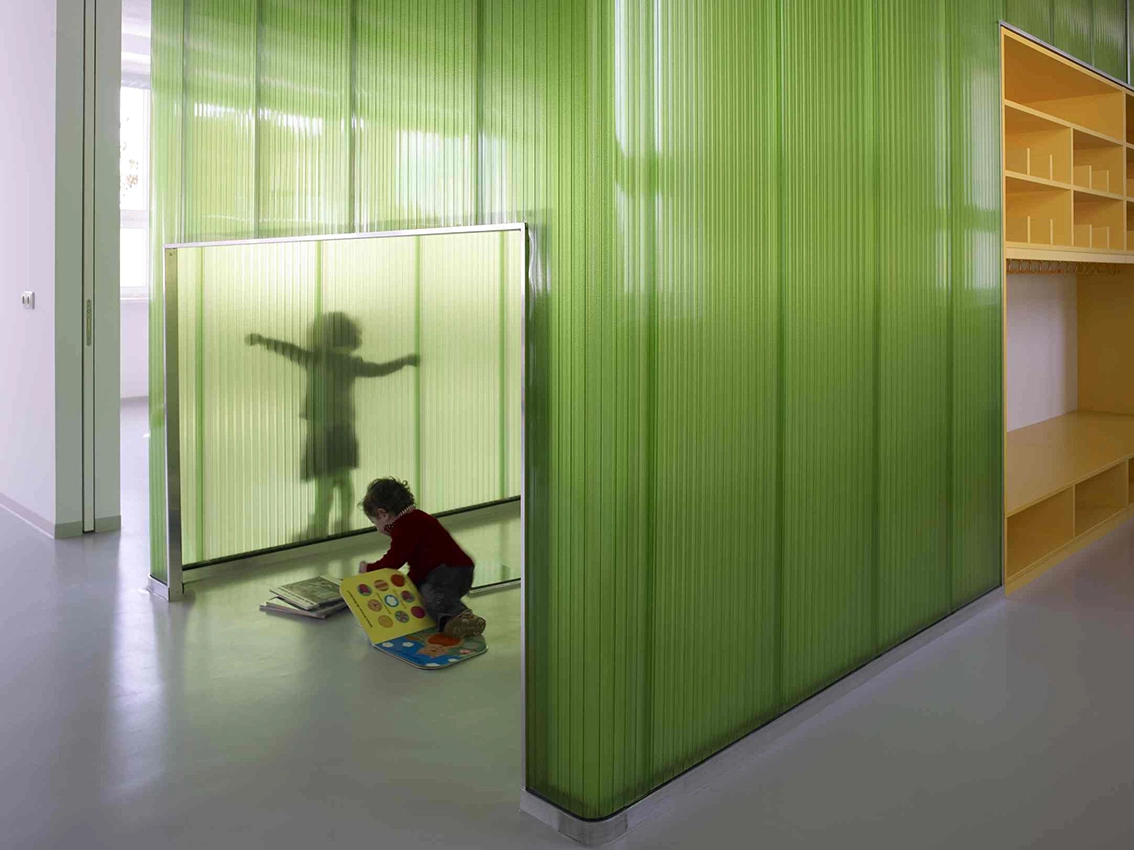
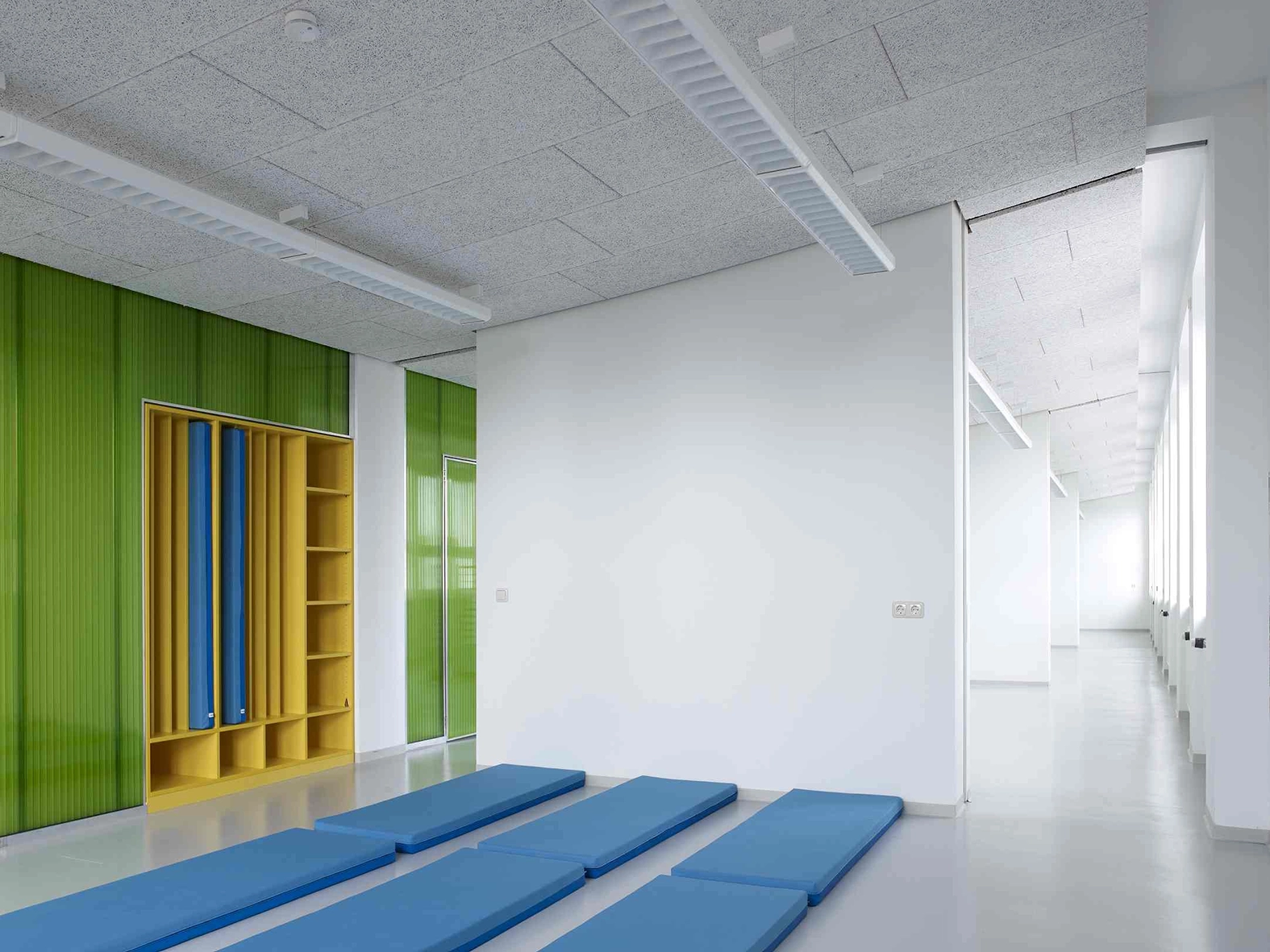
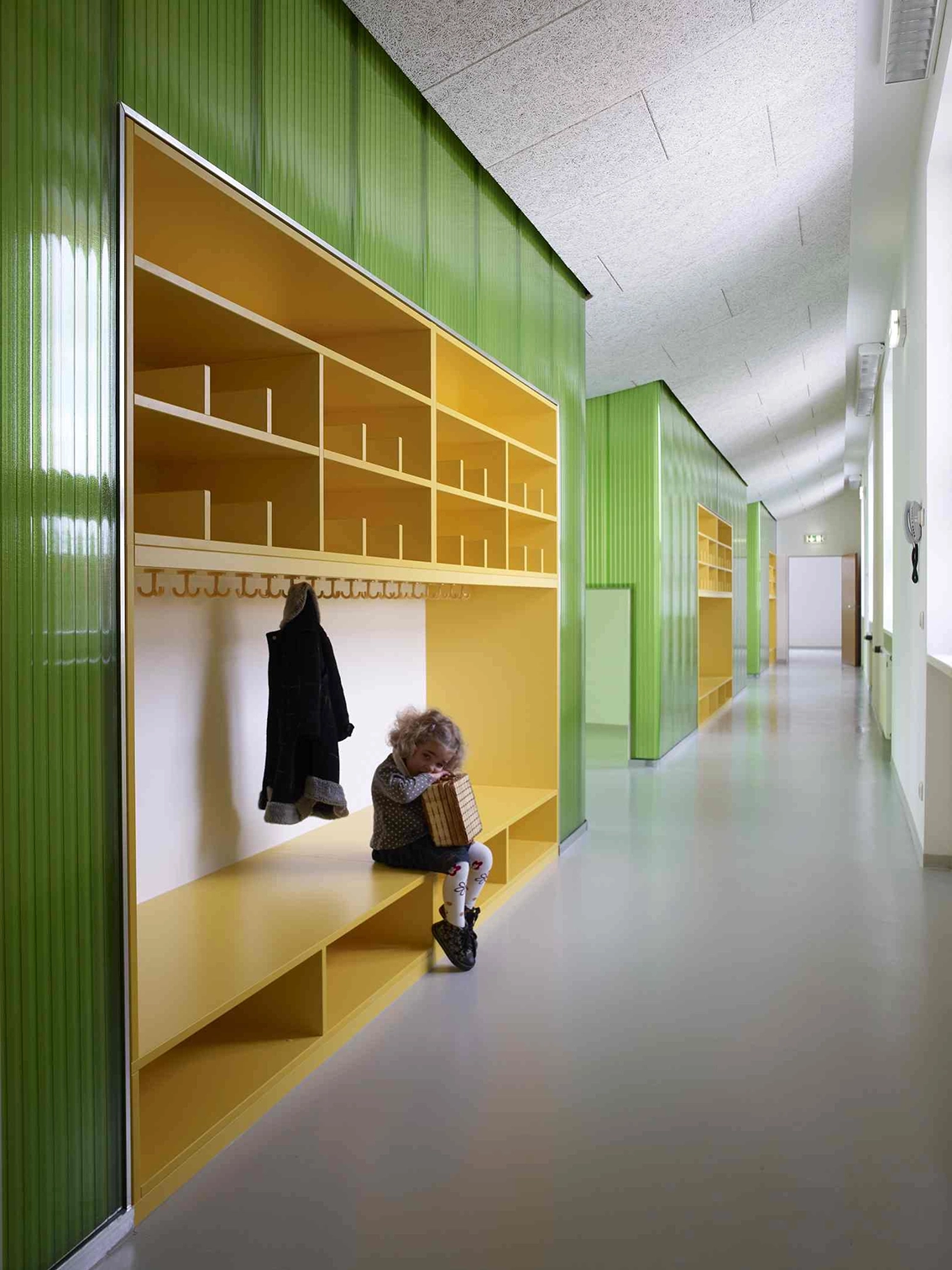
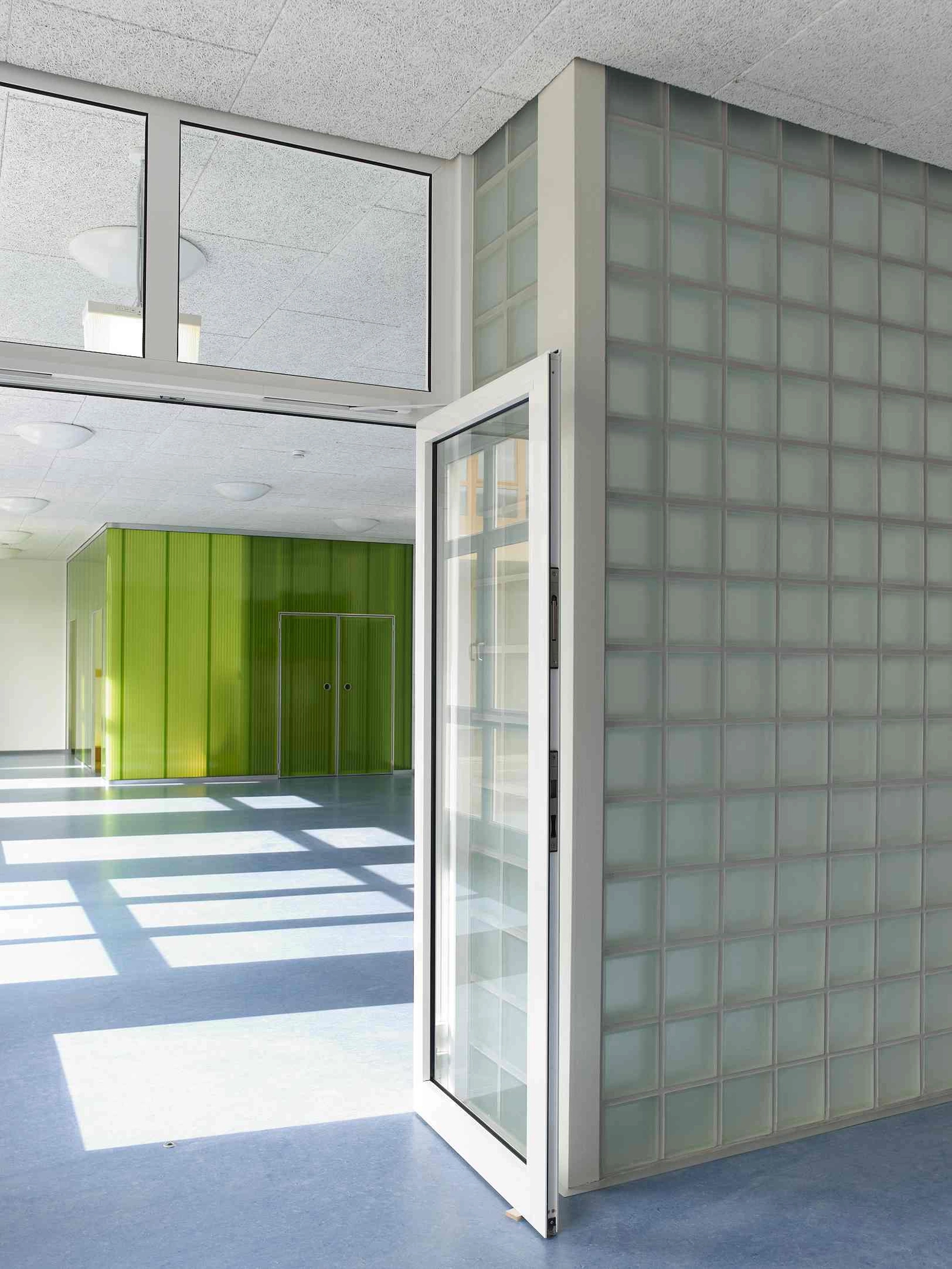
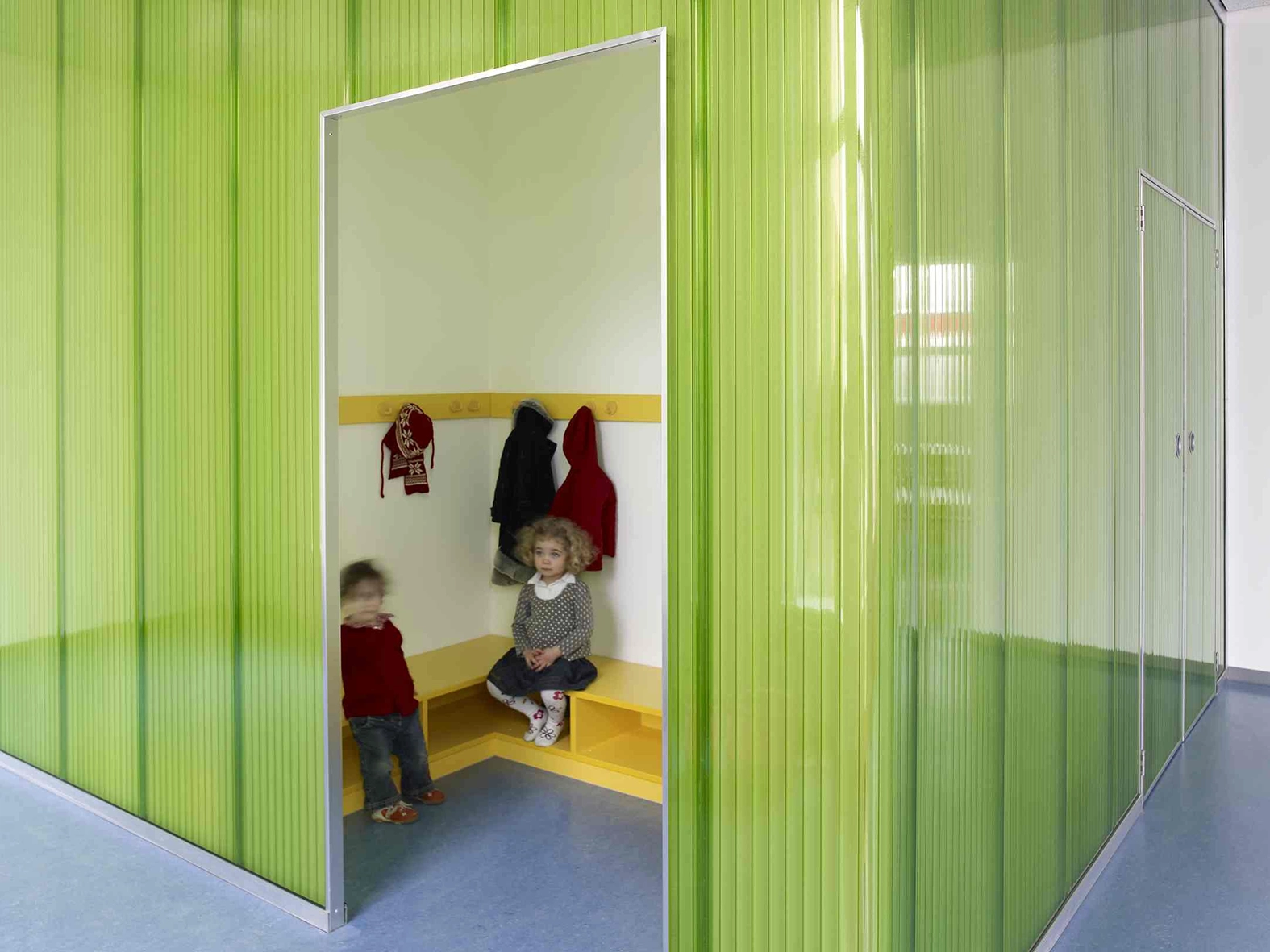
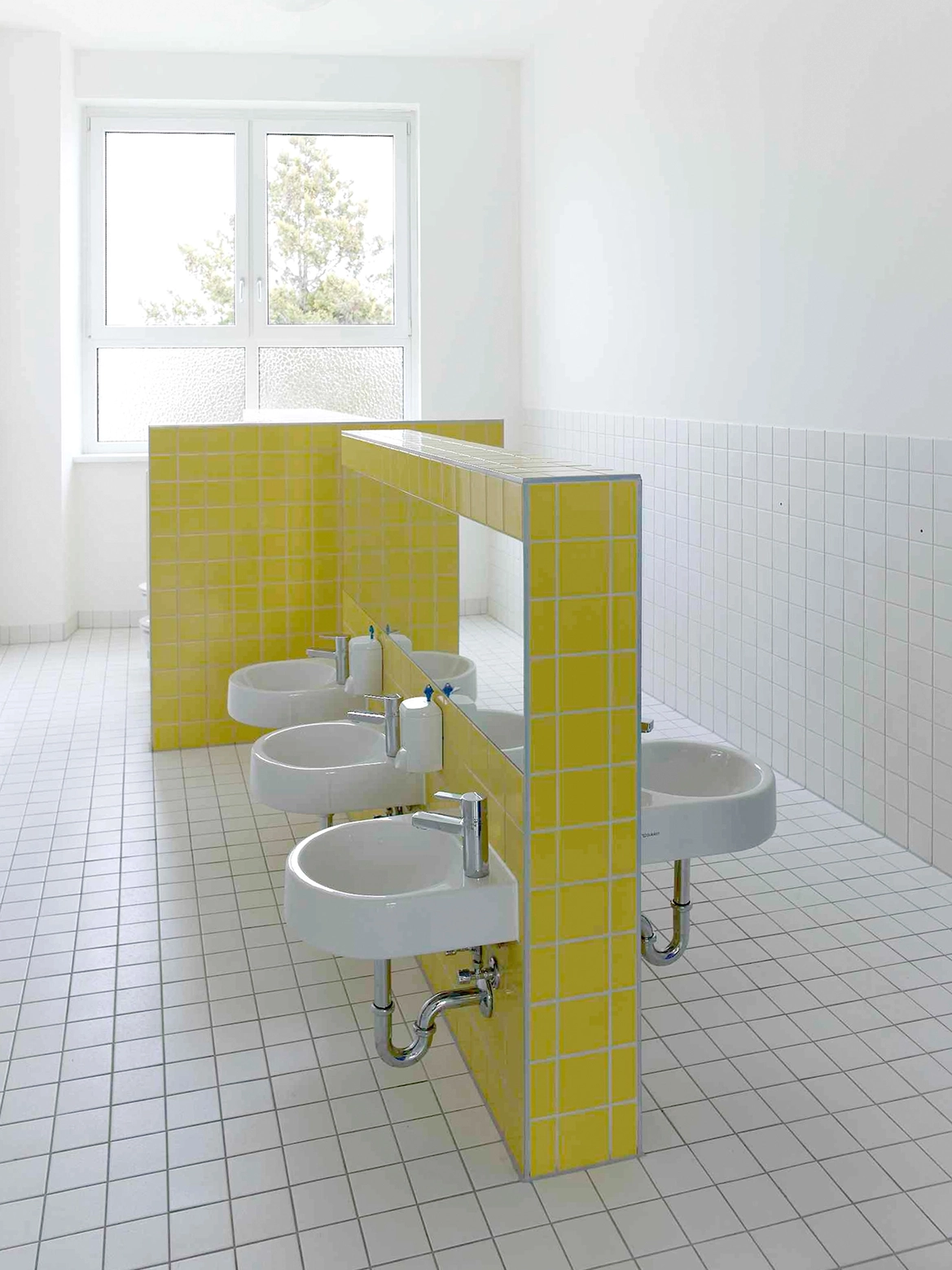
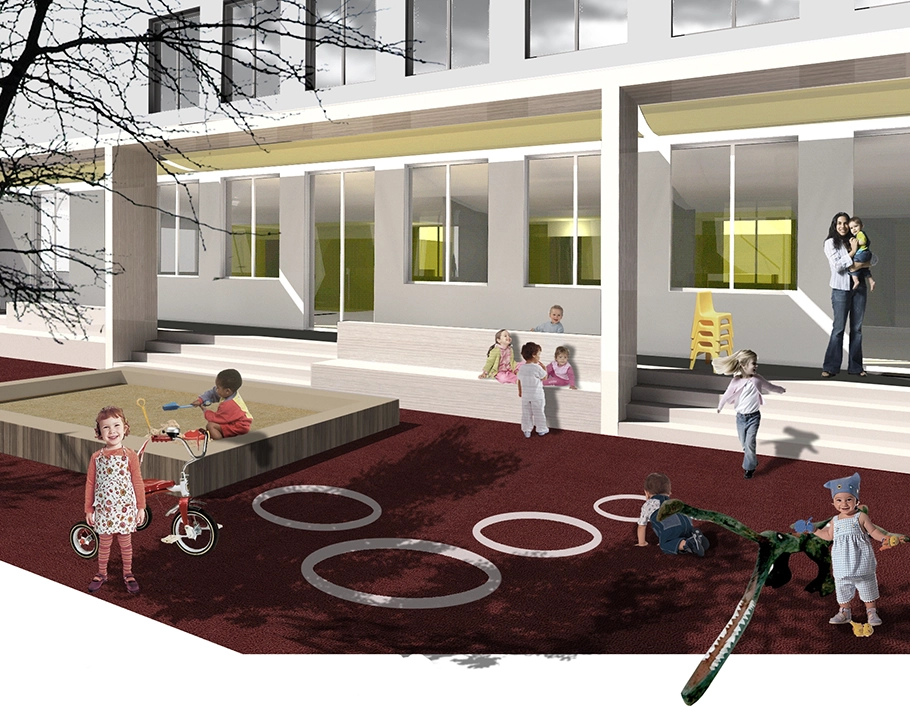
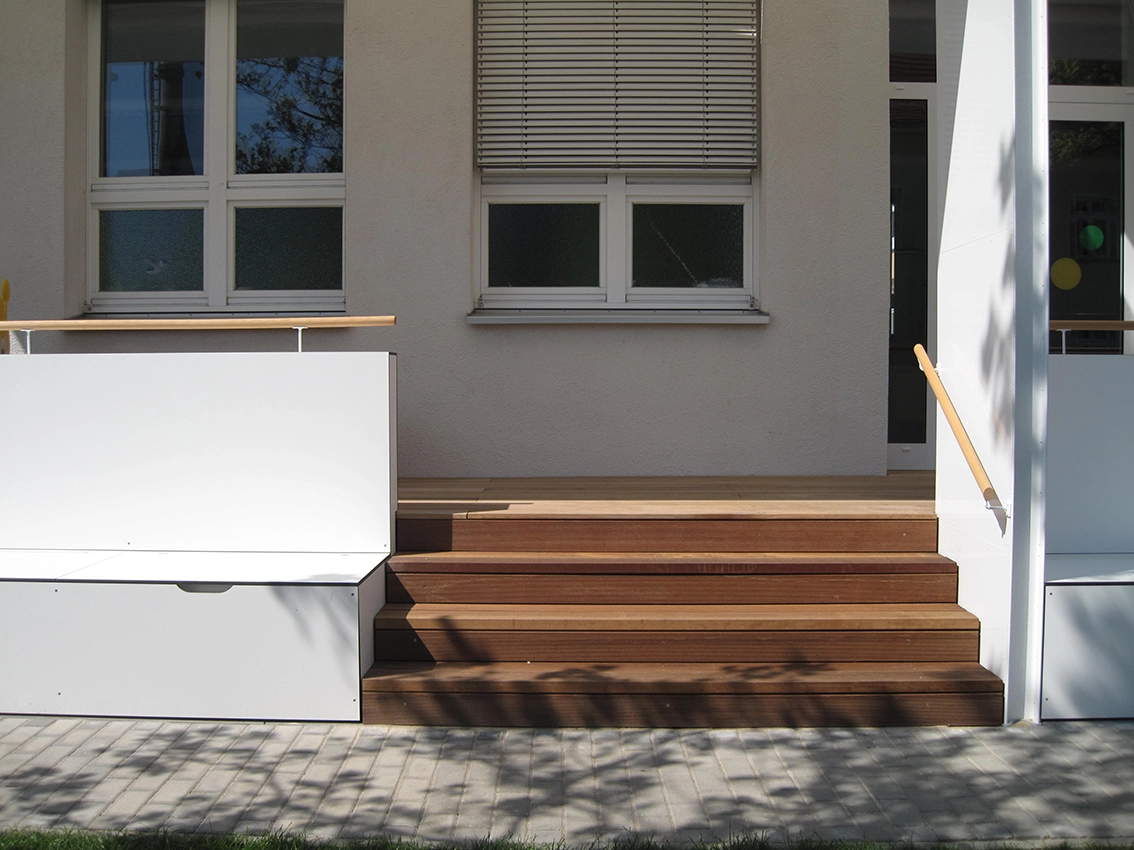
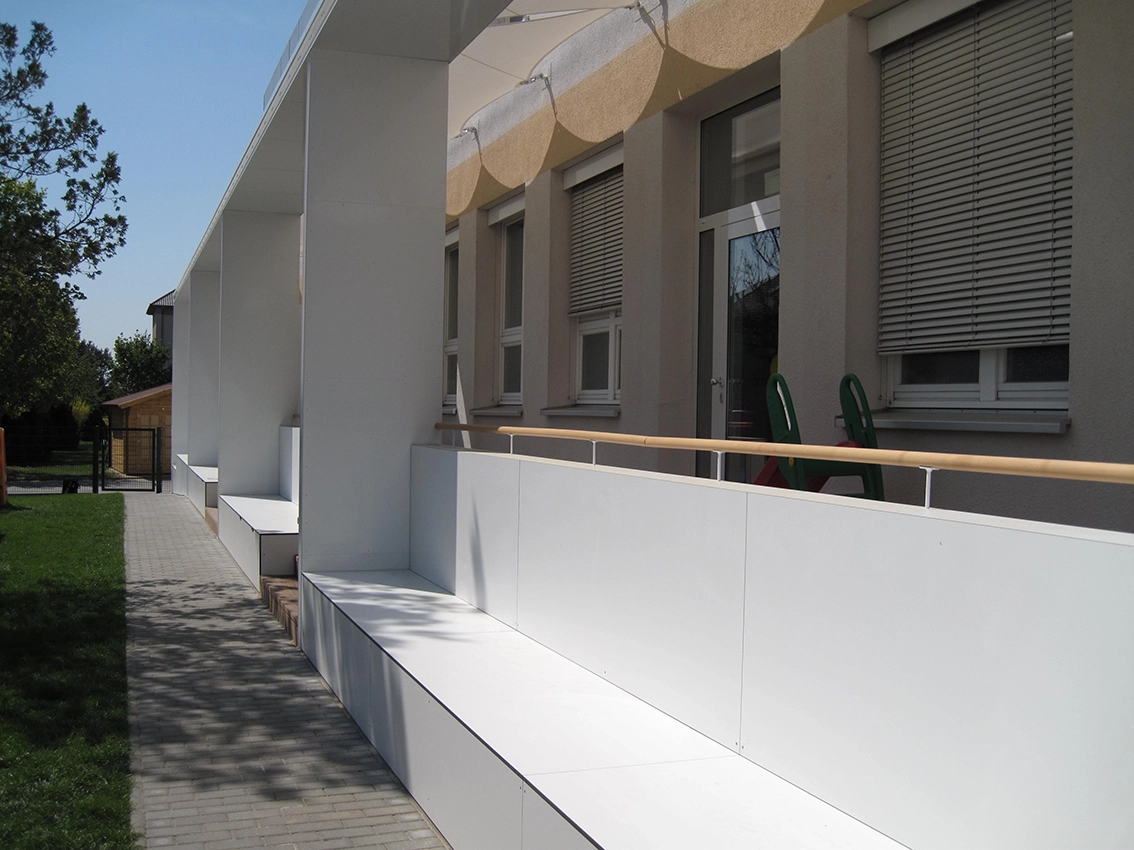
Haus des Kindes nursery school is located in Golßen, a small town south of Berlin close to the Spreewald region. The project involves the transformation of a former elementary school into a nursery school and kindergarten. Children‘s perception of space is of great importance for their development of creativity and education. This was an important starting point for our design concept. The functional needs of such a complex building as a nursery school take into account the children‘s scale, natural lighting, acoustics and climatic aspects as well as the use of colourful materials which have a positive effect on the spaces.

Architects: Jens Brinkmann, Doreen Ebert, Prof. Bernd Huckriede, Alejandro Tomás-Roldán
Collaborators: Simone Buck, Roman Röhrig, Philipp Stroh
Fotos: Frank Hülsbömer

United-Architektur-Haus-des-Kindes-Nursery-school-Nische
United-Architektur-Haus-des-Kindes-Nursery-school-Schlafraum
United-Architektur-Haus-des-Kindes-Nursery-school-Corridor
United-Architektur-Haus-des-Kindes-Nursery-school-Verbindung
United-Architektur-Haus-des-Kindes-Nursery-school-Garderobe
United-Architektur-Haus-des-Kindes-Nursery-school-Badezimmer
United-Architektur-Haus-des-Kindes-Nursery-school-Collage
United-Architektur-Haus-des-Kindes-Nursery-school-Außentreppe
United-Architektur-Haus-des-Kindes-Nursery-school-Sitzbank1

Art Installation with Bernd Trasberger

Art Installation with Bernd Trasberger

Humboldt Forum Berlin, Germany

The competition entry titled »Mocca Eck«by artist Bernd Trasberger, is a proposal for an installation integrated into the main stair of the forthcoming Humboldt Forum in Berlin. United Architektur collaborated with the artist to develop and present the technical and aesthetic considerations relating to the location of the object in space.

The competition entry proposes to restore a heavily damaged coffee cup attached to the façade of the iconic Haus der Statistik in Alexanderplatz and hang it as a sculpture over the main stair in the new Humboldt Forum. The trails of rising steam that formerly pointed the way to Café Mocca Eck, an important place in the public life of former East Berlin, are rearranged to float above the stair.

On one hand, the proposal discusses the role that coffee plays as part of a complex relationship between global cultures and everyday life in Germany. On the other hand, the work raises important questions concerning the preservation of important relics of art and architecture from East German modernism. In the course of the project, a copy of the original coffee cup will be created according to the existing artifact. This new wall object will take the place of the original during the future renovation of Haus der Statistik, thereby retaining its presence in the urban realm.
The conceptual duplication of the coffee cup thus establishes a dialogue with the Humboldt Forum as a new type of museum dedicated to process and research. It frames the building as a cosmopolitan place eager to address new and unusual possibilities of coexistence between cultures and nations while raising fundamental questions about art and nature.

Architects: Jens Brinkmann
Collaborators: Gonca Yilmaz, Dana Faridani-Rad

United-Architektur-Installation-Trasberger-Mocca-Eck.jpg
United-Architektur-Installation-Trasberger-Modell
United-Architektur-Installation-Trasberger-Galerie
United-Architektur-Installation-Trasberger-View
United-Architektur-Installation-Trasberger-Back

House B, Hannover

House B

Hannover, Germany

The clients asked for a modification of their 1960’s duplex house, located in the city centre of Lower Saxony’s capital of Hannover. The house achieves its generousness through double height spaces in the dining room and living area. The project involved new handrail protection on the ground and first floor, translucent sliding-walls, a new library, and furniture including a sideboard and seat pads. Invisibility and spatial generousness were the main theme of the project. This led to the use of materials such as white polyester net-weave, transparent and translucent polycarbonate as well as white coated metal fixtures and steel cable.

The hanging sideboard also creates impression of lightness through its lateral fixture. It leaves a space to the wall, which follows the whole length of the furniture. The sideboard is made out of white coated metal and has three doors on the front. The seat pads were designed to block the stairs so that children cannot hurt themselves, but can be used in different ways, for example for sitting, playing or resting. There are several configurations of seat pads available.

Architects: Jens Brinkmann
Manufacturing of furniture: Elena Kikina
Photos: Birgit Krause

United-Architektur-Haus-B-Corridor
United-Architektur-Haus-B-Dinning
United-Architektur-Haus-B-Modell

Tyrol Research Archive, Austria

Tyrol Research Archive

Hall in Tyrol, Austria

The Archive and Research Centre of Tyrol’s National Museums fits in well with the heterogeneous building structure of the surrounding built environment through limited space consumption as a cubic building.  The enclosed stone cube is a treasure chest and safe for cultural assets. The roof, which appears as a fifth facade, is well distinguishable and recognizable from above. However, the building still appears compact in the immediate vicinity. The incisions into the stone ‚cube‘ alludes to archaeological excavation trenches. The ground floor in the first section of the building comprises of easily accessible delivery zones and workshops. Archives are situated below and spaces which need daylight, such as offices and studios, are in the upper floors. The layering of the building leads to a clear spatial division of functional areas into various climatic sections.

Architects: Jens Brinkmann, Bernd Huckriede
Collaborators: Julie Biron, Lorenza Manfredi

United-Architektur-Tyrol-Research-Archive-Modell
United-Architektur-Tyrol-Research-Archive-Lageplan

Case Study House I

Case Study House I

Brandenburg, Germany

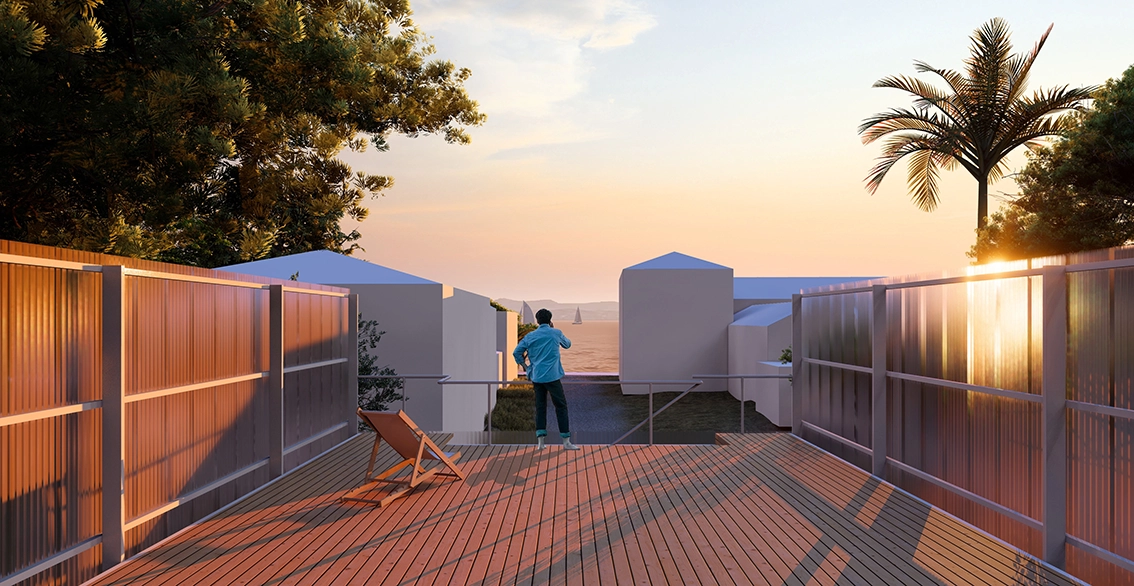
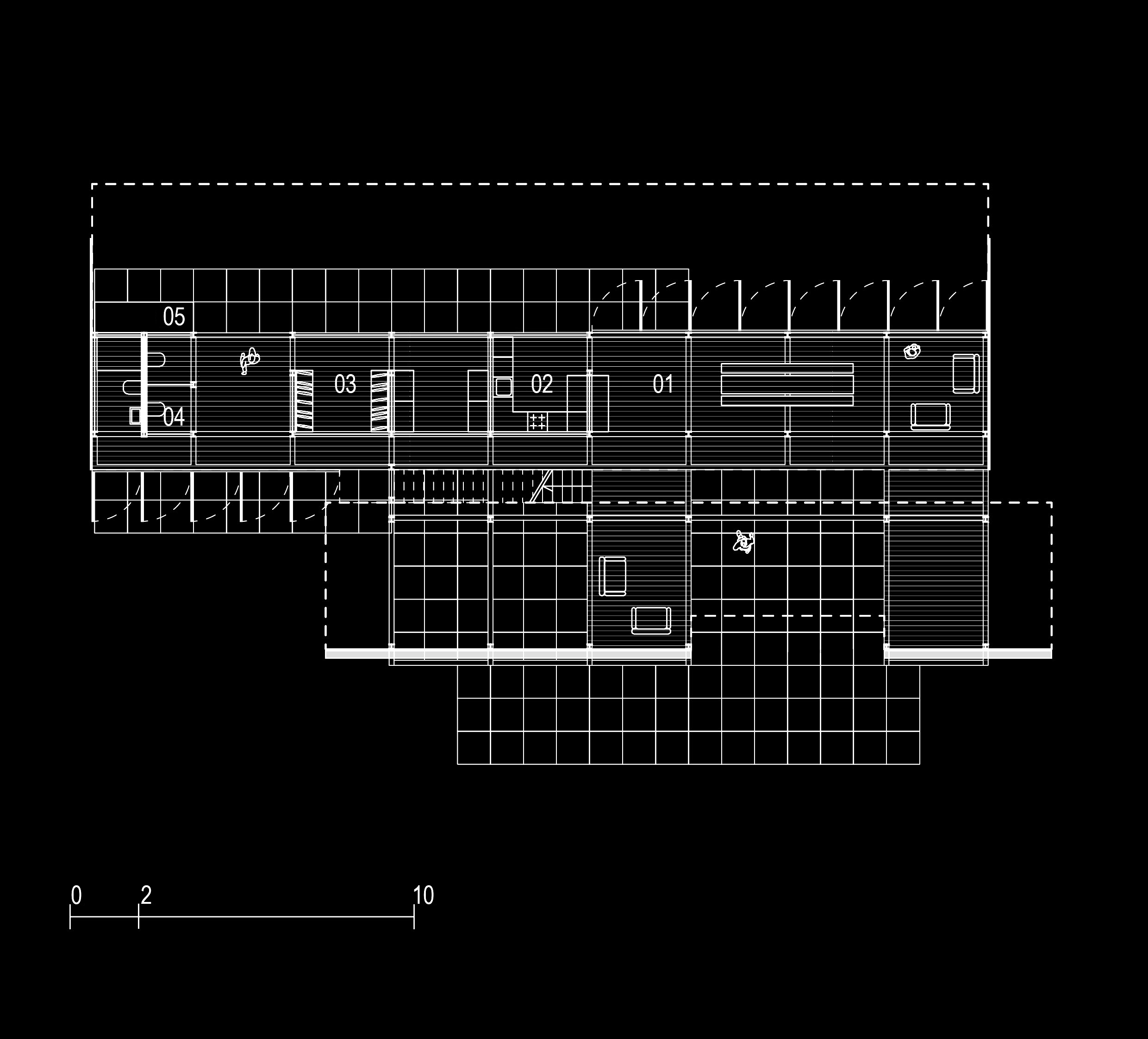
This seasonal residence explores the link to nature as its leading idea. It can be seen as a variable threshold between internal and external areas. The interior is organized by repeated modules with various functions. It is perceived as one stretched space, running along the glassed garden facade.

Architects: Jens Brinkmann.
Collaborators: Aya Yamanaka, Derek Kleynhans, Julius Hahmann, Juan Carlos Zapata Baldrich, Mariam Founda

United-Architektur-Case-Study-House-Collage1
United-Architektur-Case-Study-House-Icon
United-Architektur-Case-Study-House-Exploded-Axonometrie
United-Architektur-Case-Study-House-Modell1
United-Architektur-Case-Study-House-Modell2

Privacy Settings
We use cookies to enhance your experience while using our website. If you are using our Services via a browser you can restrict, block or remove cookies through your web browser settings. We also use content and scripts from third parties that may use tracking technologies. You can selectively provide your consent below to allow such third party embeds. For complete information about the cookies we use, data we collect and how we process them, please check our Privacy Policy
Youtube
Consent to display content from - Youtube
Vimeo
Consent to display content from - Vimeo
Google Maps
Consent to display content from - Google